Family collection of lost letters, diaries and objects found in attics and archives retrace archetypal ancestors' footprints to discover their lost life stories
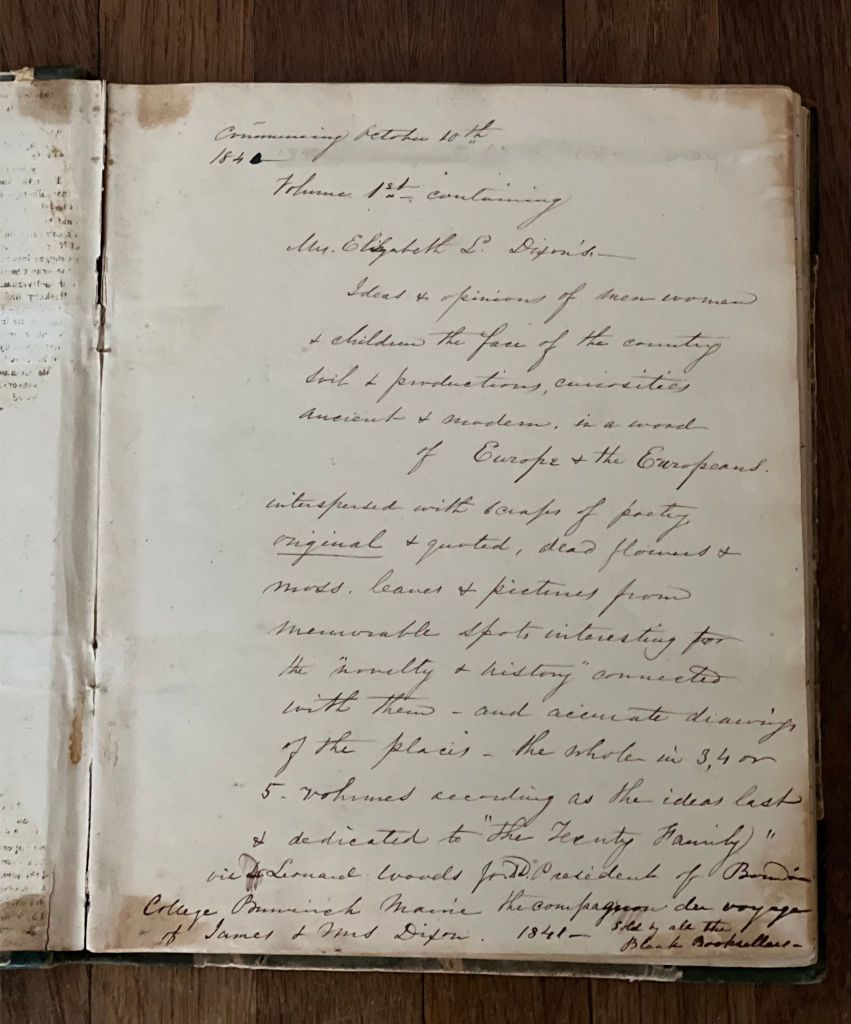
So begins the 1840 honeymoon diary of Elizabeth L.C. Dixon. Her later diary written in 1845-47 described life as young mother and wife of a Congressman in Washington, DC was published in White House History, Issue 33.
Commencing October 10th, 1840 Volume 1st containing Mrs. Elizabeth L Dixon’s ideas and opinions of men, women and children, the face of the country soil and productions, curiosities ancient and modern, in a word of Europe and the Europeans. Interspersed with scraps of poetry original and quoted, dead flowers and moss, leaves, and pictures from memorable spots, interesting for “novelty and history” connected with them– and accurate drawings of the places – the whole in 3, 4 or 5 volumes according as the ideas last & dedicated to “The Teeny Family” vis Dr. Leonard Woods Jr. DDs, President of Bowdoin College, Brunswick, ME the compaguon du voyage of James & Mrs. Dixon 1841 –Sold by all the Blank Booksellers
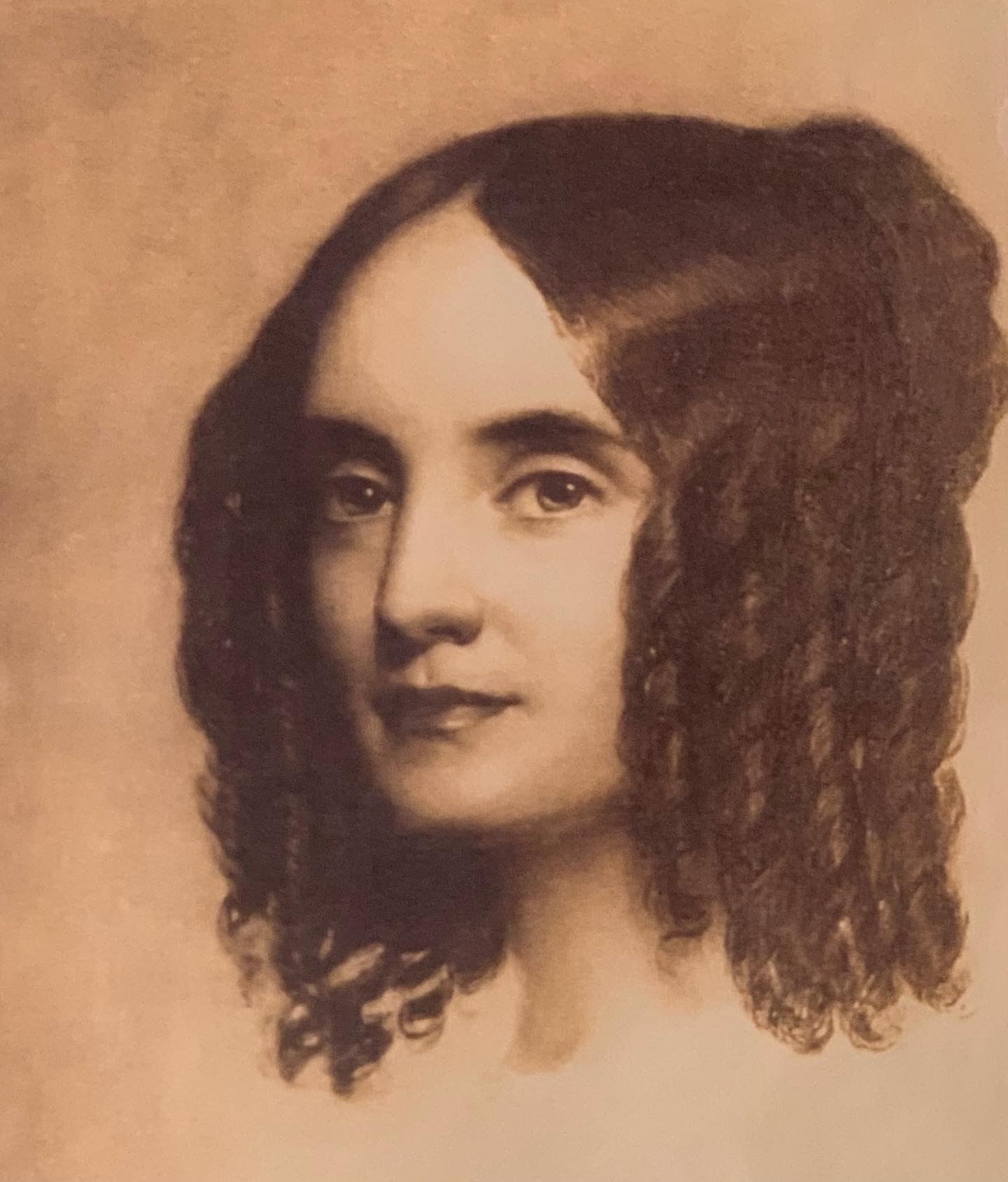
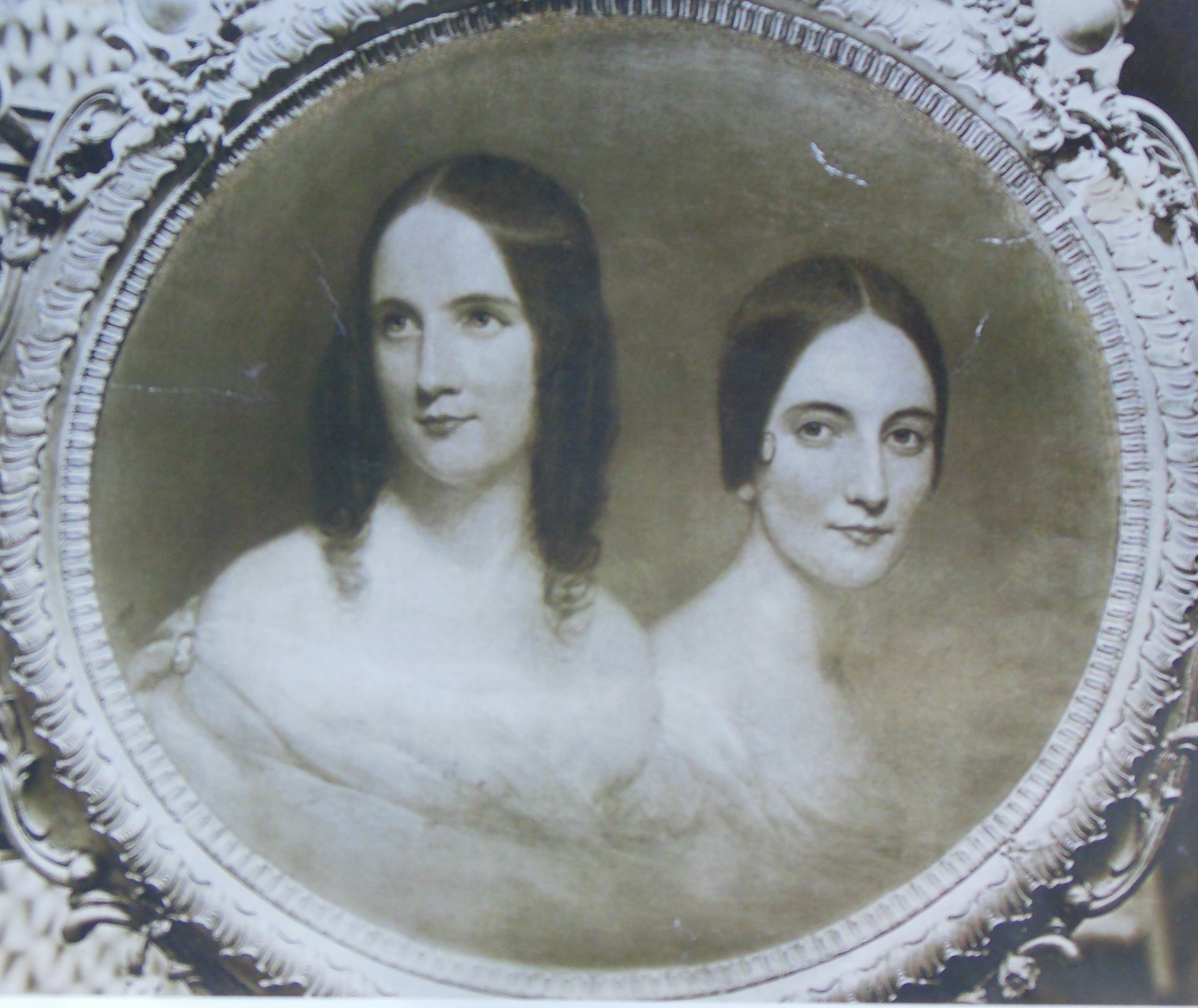
Elizabeth L. C. Dixon 1840 age 21
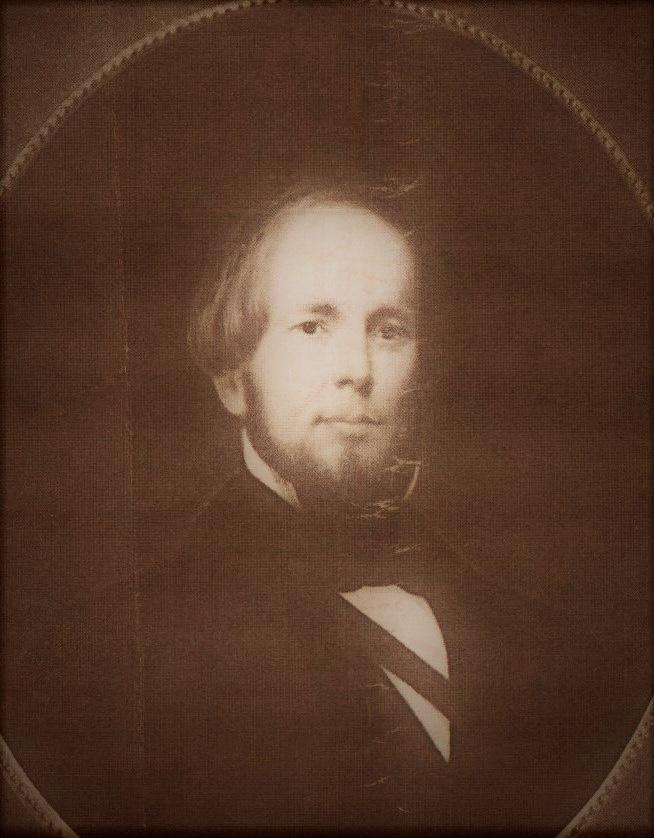
James Dixon 1840 age 27
Leonard Woods, Jr. Bowdoin president Dixons’ chaperone
This post is a follow up to the Jan 1st, 1846 entry in Diary of Elizabeth Dixon, Issue 33, of White House History.
Given today is the 200 year anniversary of the birth of Frederick Law Olmsted. Video by me, Music by my brother, Will Welling. Images in video follow below. #OTD #Olmsted200
The Diary of Elizabeth Dixon written during her time in Washington, D.C. Elizabeth often mentions the Kirkpatrick family of New Brunswick, New Jersey. She first visited them on her way from Connecticut to Washington.
Wednesday October 15, 1845. Mrs. Kirkpatrick came to pass the day and took tea the following day. Mr. Kirkpatrick had helped James Dixon find their lodgings. November 28, 1845 We went to tea at Mr. Kirkpatrick’s… Mr. Dixon had been with Mr. K. to the various houses.. and then soon the next day. Saturday November 29, 1845 Mrs. Kirkpatrick called to bring my nurse Mrs. Skippen to present & I liked her appearance better than any nurse I have had. She is pleasant & good tempered I am sure. I bid her adieu till January. Mrs. Kirkpatrick had arranged for a nurse for Elizabeth, who was seven months pregnant and due in late January.  These caring Kirkpatrick family members were Elizabeth Dixon’s stepmother’s family. In April 1837, when Elizabeth Dixon was 17 years old her mother, Elizabeth Abbott Cogswell died.
Elizabeth Abbott Cogswell
Later that year her father, Rev. Jonathan Cogswell married Miss Jane Eudora Kirkpatrick, daughter of Andrew Kirkpatrick and Mrs. Jane Bayard Kirkpatrick of New Brunswick, New Jersey. Mrs. Kirkpatrick’s sister was Margaret Bayard Smith, the famous author who died two years before the Dixons arrived in Washington; but no doubt Elizabeth Dixon was well aware of her writings and perhaps letters that were sent to her stepmother.
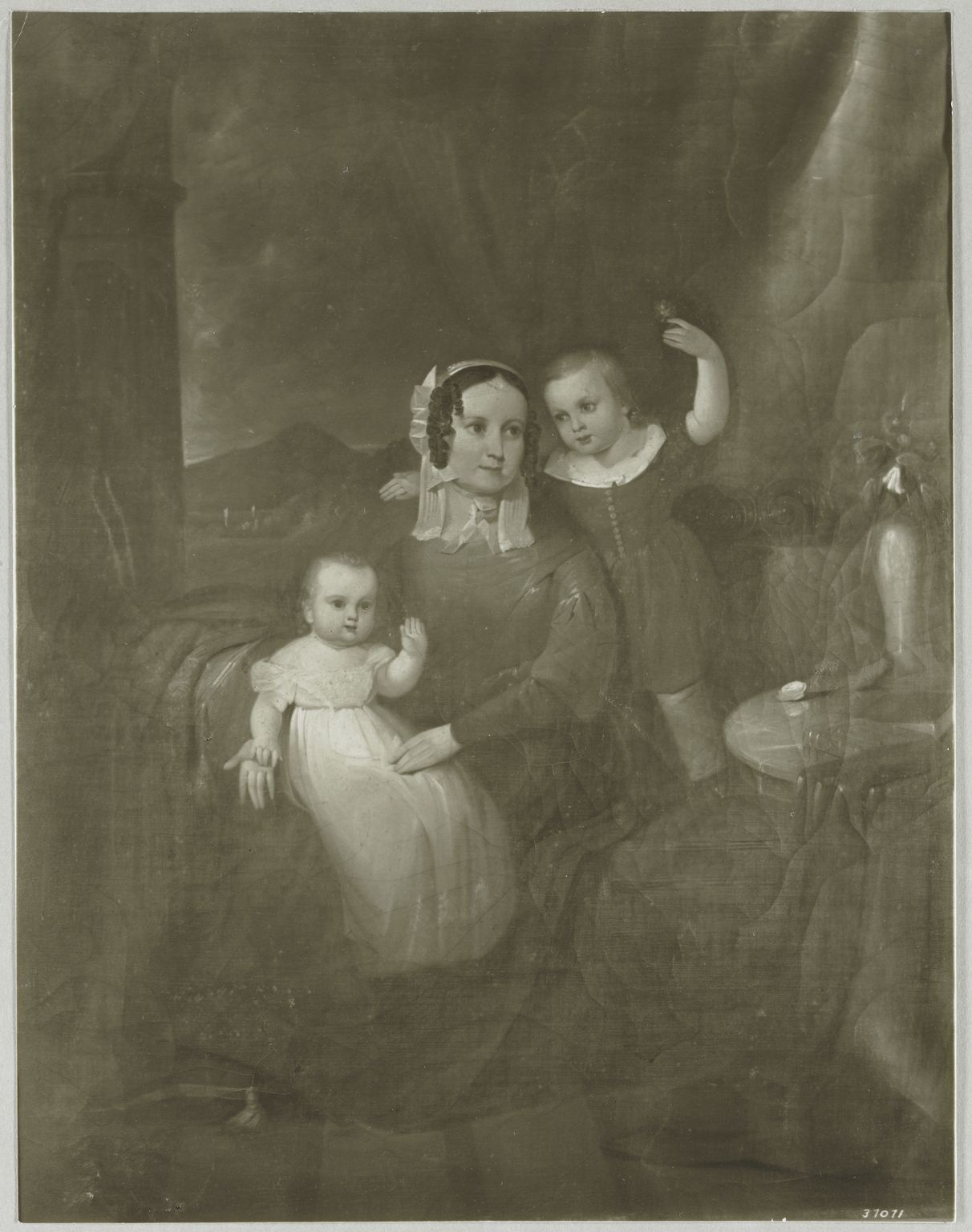
This portrait is Elizabeth Dixon’s stepmother, Mrs. Jonathan Cogswell with Children, Jane Cogswell and Andrew Kirkpatrick Cogswell.
We know little about Elizabeth Abbott Cogswell, as none of her writing was preserved. But these touching words were written to Elizabeth Dixon’s stepmother, Mrs. Jane Kirkpatrick Cogswell from her mother, Mrs. Jane Bayard Kirkpatrick. What wonderful advice and departing works to offer to your child.
MY DEAR DAUGHTER I hope you will find your mental resources augmented by what you see abroad. Every form of society must present hints for the improvement of character. Whether the manners are to be admired, or are censurable, our own minds may be amended by emulating what is good and avoiding what is evil. After reflection, does as much good as present observation. Things appear more in their true light and just proportion when seen at a distance. And while you cultivate your talents, and polish your manners, study to acquire those graces which are above all price, meckness, gentleness, and charity. A knowledge of the varieties of character and circumstances of human life is useful in forming and strengthening the judgment. An actual observation of things is more important than remarks found in books. It enables one better to estimate what is advanced by others. A magnificent spectacle met my eye this morning. Every tree, shrub, and twig were incrusted with ice, and when the sun shone, a magic world of crystal fixed tha gaze. The frost work was superb, but like all the fragile glories of our sublunary sphere, the very sunbeam that caused their brilliance accelerated their destruction.
In the evening of April 15, 2021, the 156th anniversary of the death of President Abraham Lincoln the Arts Club of Washington commemorated his life and legacy with the virtual program, “Lincoln’s Last Breath”.
The program explored Civil War friendship of Mrs. Elizabeth L. C. Dixon, wife of Senator James Dixon of Connecticut and Mrs. Mary Todd Lincoln.
Elizabeth Dixon, was my great great grandmother, and she left us a trove of letters and relics that allow us to retrace her foot prints and friendship with the Lincoln‘s from their first days in Washington until their last.
Elizabeth and her junior congressman husband, James Dixon of Connecticut had first come to Washington in November 1845, during the Polk administration. During these years she kept a journal, a diary, that described those first years in Washington. It had been partially transcribed in the 1970s by my great aunt Elsa, before she donated it to the Connecticut Historical Society, where it remained virtually forgotten.
Elizabeth Dixon was my grandfather’s grandmother. She was my great, great grandmother. This diary, she had dedicated to her daughters Bessie and Clementine. Clementine awas my great grandmother, Mrs. Clementine L.D. Welling.
Journal written during a residence in Washington during the 29th Congress commencing first of Dec, 1845 Dedicated to my daughters Bessie in Clementine by their mother, Elizabeth L. C. Dixon
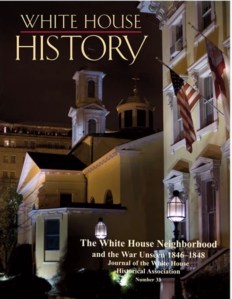
From 2009-2012 I took on the arduous task and transcribed her 50 page handwritten diary and submitted this transcription to the White House Historical Association, who published; The Diary of Elizabeth Dixon in
During Covid, I have been transcribing another of Elizabeth Dixon‘s diary, the Dixon’s 1840-41 Honeymoon Grand Tour through Europe. Watch for future posts. Until then, Caroline
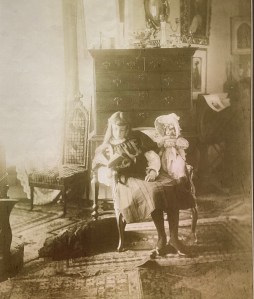
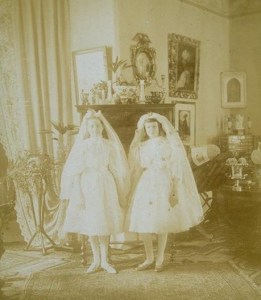
Dixon-Welling home at 159 Farmington Ave, Hartford, CT with Elsa Welling readingDixon-Welling home at 159 Farmington Ave, Hartford, CT with Josephine Toy and Elsa Welling
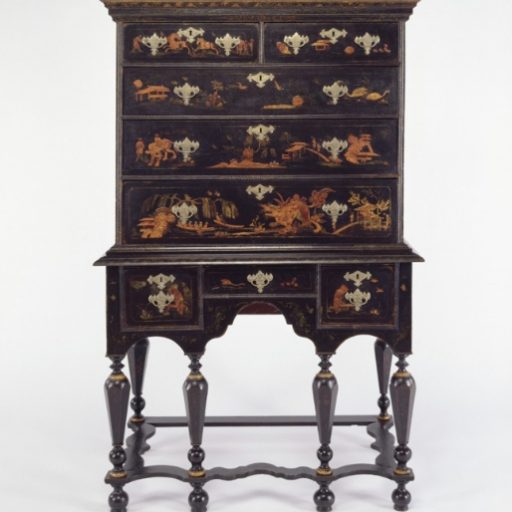
In the center of the photos above is a beautiful and extremely rare japanned high chest.
The high chest shown in the images above is currently on exhibit in the American galleries exhibit at the Virginia Museum of Fine Arts.
In an old 2002 antiques article I discovered the whereabouts of my aunt’s high chest she reluctantly sold in the 1970’s. Along with the whereabouts of the high chest, I gained a new appreciation for piece’s craftsmanship and aesthetic value.
In 1976 Zeke Liverant, an antique dealer from Colchester, CT purchased the high chest for Albert Sack and the Kaufman’s, renown collectors and philanthropists. In 1980’s, the high chest was part of an exhibit at the National Gallery of Art in Washington, DC. In 1991 Israel Sack, Inc bought it back for the Virginia Museum of Fine Arts, where it is today.
The high chest had been a treasured family heirloom for more than 250 years being passed down over the generations from our New England ancestors. Collectors and museums value our high chest because it is the only known example of Boston japanned furniture by John Scottow, who had been a neighbor of the Abbott and Cogswell families of Boston.
Up until 1970’s family papers or items with historical significance were never sold to private collectors. They were always donated to the Connecticut Historical Society. our gr-gr grandfather began the legacy in 1842 as a life member of the Connecticut Historical Society at the Wadsworth Atheneum.
Rest easy dear aunt, the high chest you so treasured now has a notable home, not in our family parlor but accessible to museum visitors and furniture historians of the future — your high chest now resides as the anchor for American collection at the Virginia Museum of Fine Art.
A pleasant distraction during this covid pandemic, has been reading the European honeymoon diary of our great-grandparents. Their diary was passed down over the generations, first to their daughter, Mrs. Clementine Welling, then to her daughter, Miss Elizabeth Dixon Welling and then given to me.
The diary, comprised of four leather bound notebooks, began October 10, 1840, shortly after their wedding. Three of the volumes, in the hand of our great grandmother; Elizabeth L. C. Dixon, in which she described departure from New York City, journey across the Atlantic on the SS Great Western steamship, their travel adventures throughout England, France and Italy. The 4th volume of the diary, described the last days in Europe and return home, was written in the hand of our great grandfather, James Dixon, after his young wife, became too ill to write.
Below are images of a few of the pages of the diary.
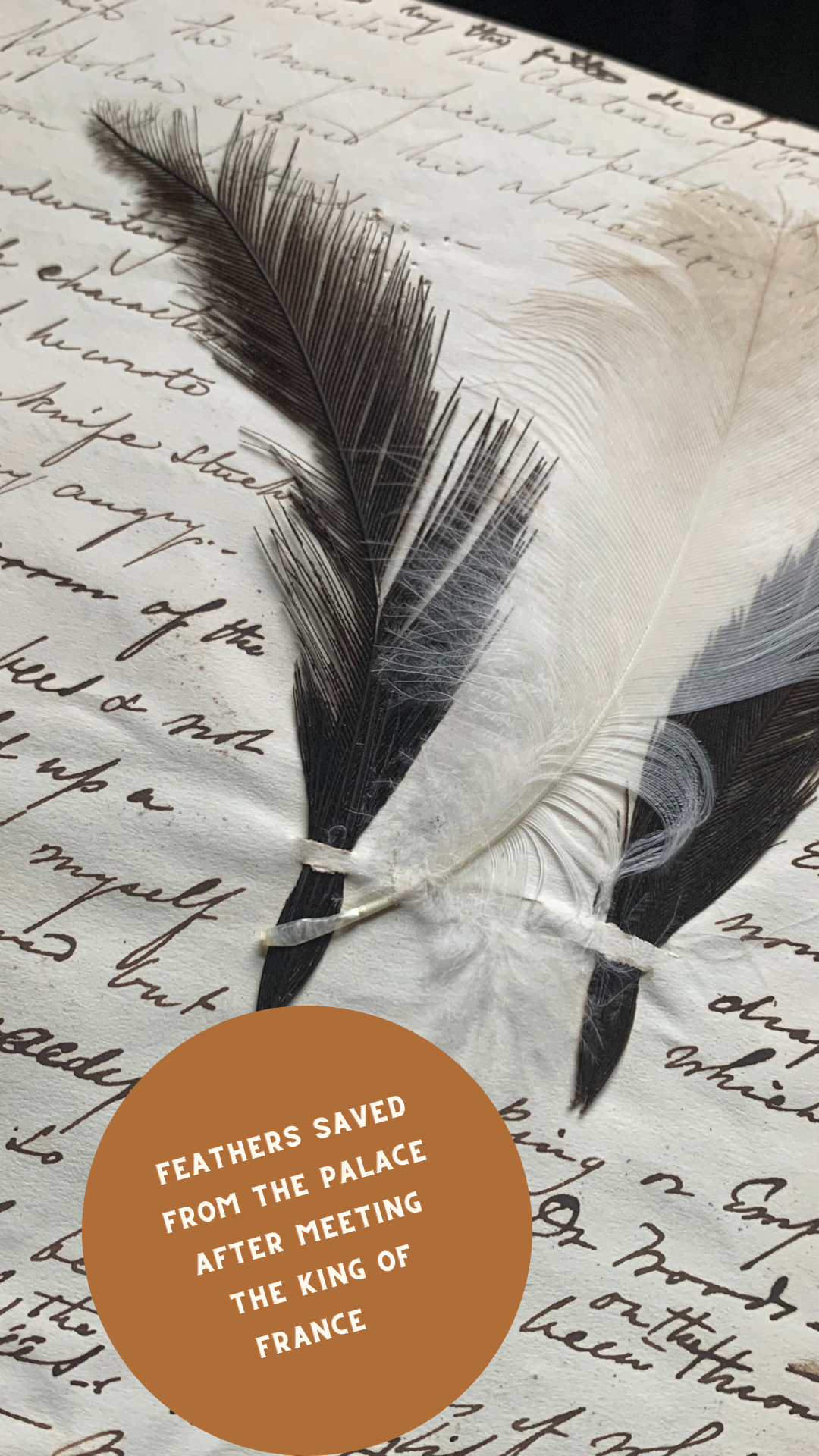
Feathers from her palace visit
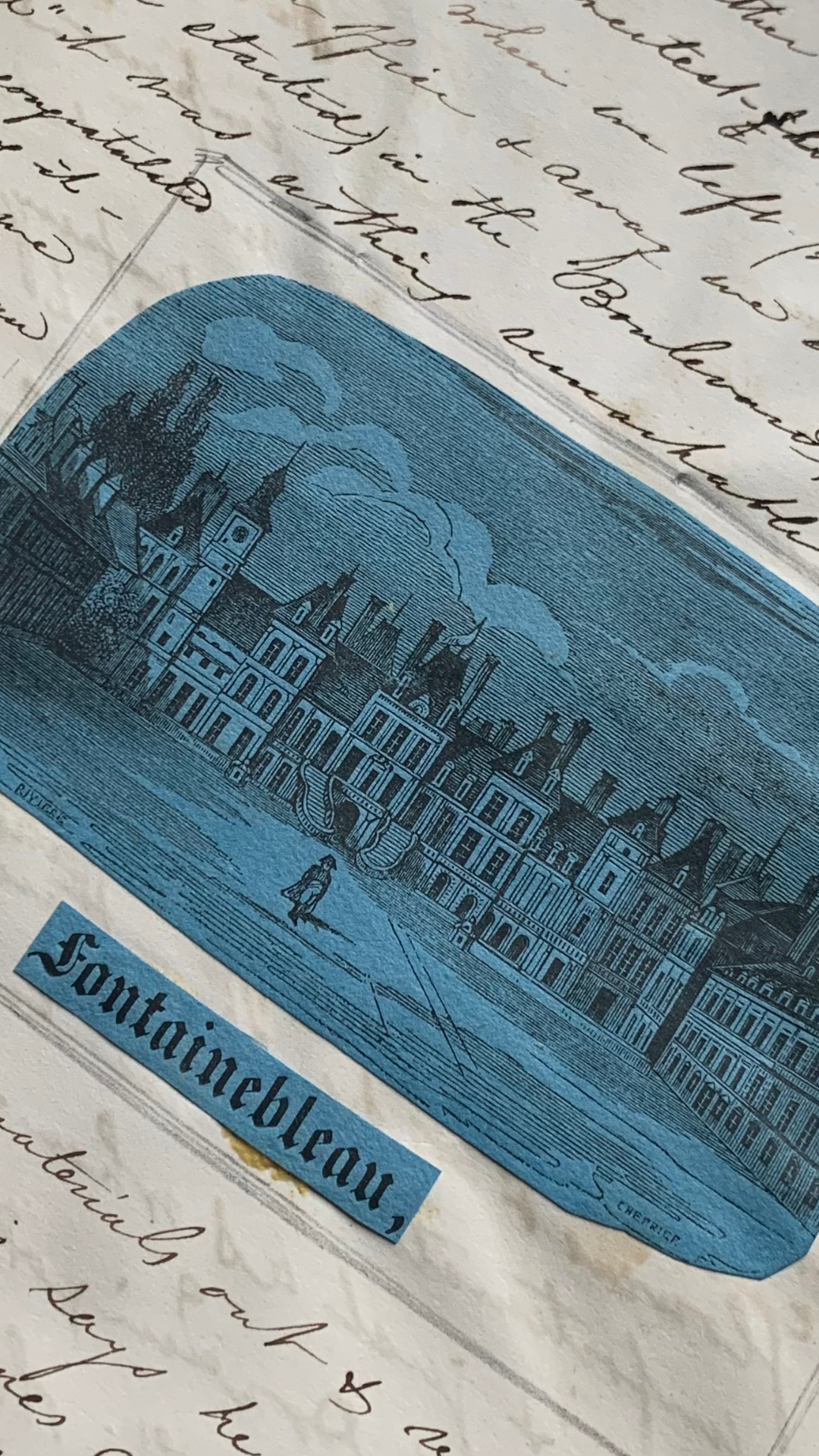
1840 advertisement of Fontainebleau
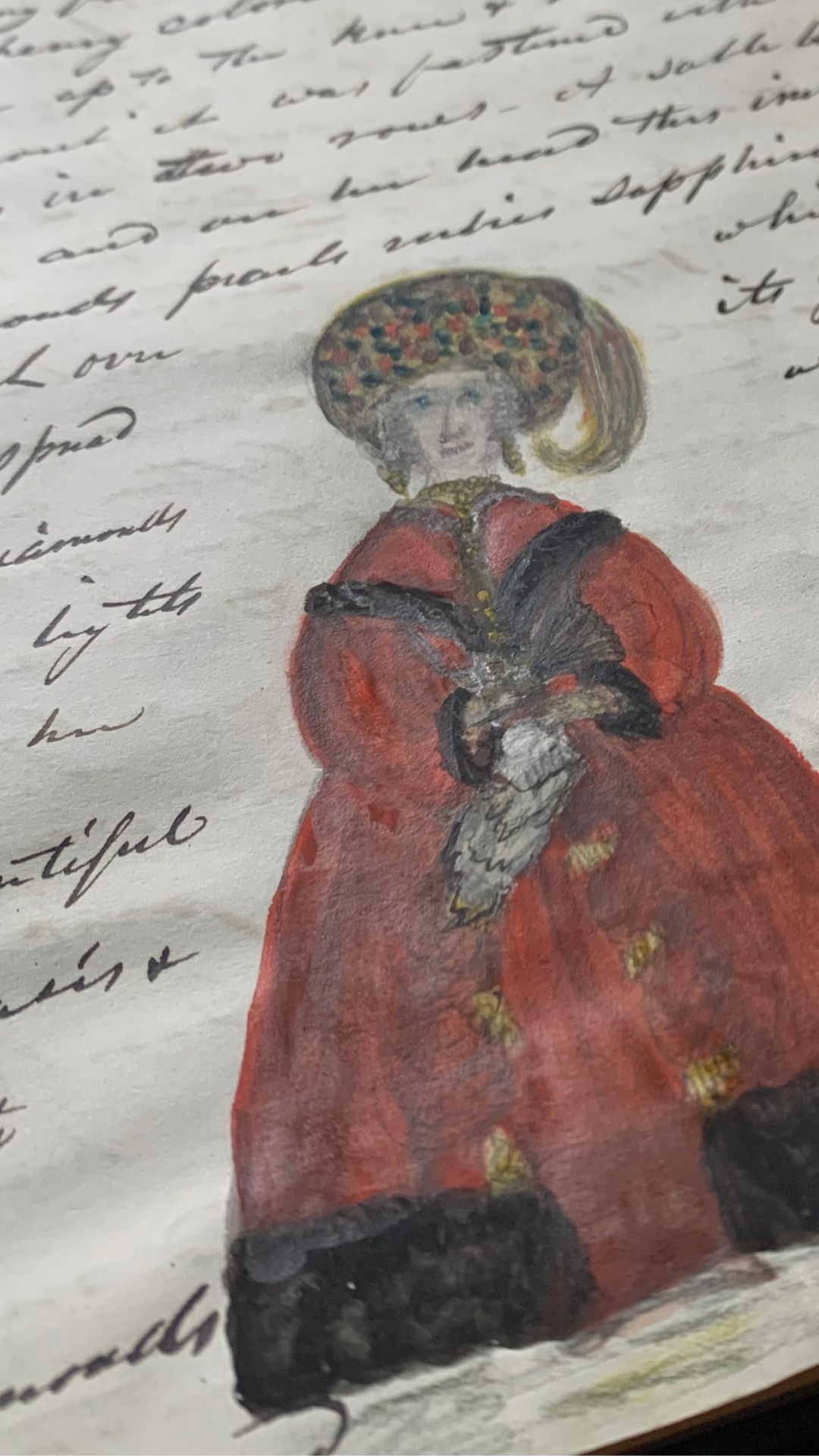
Drawing of Queen of France
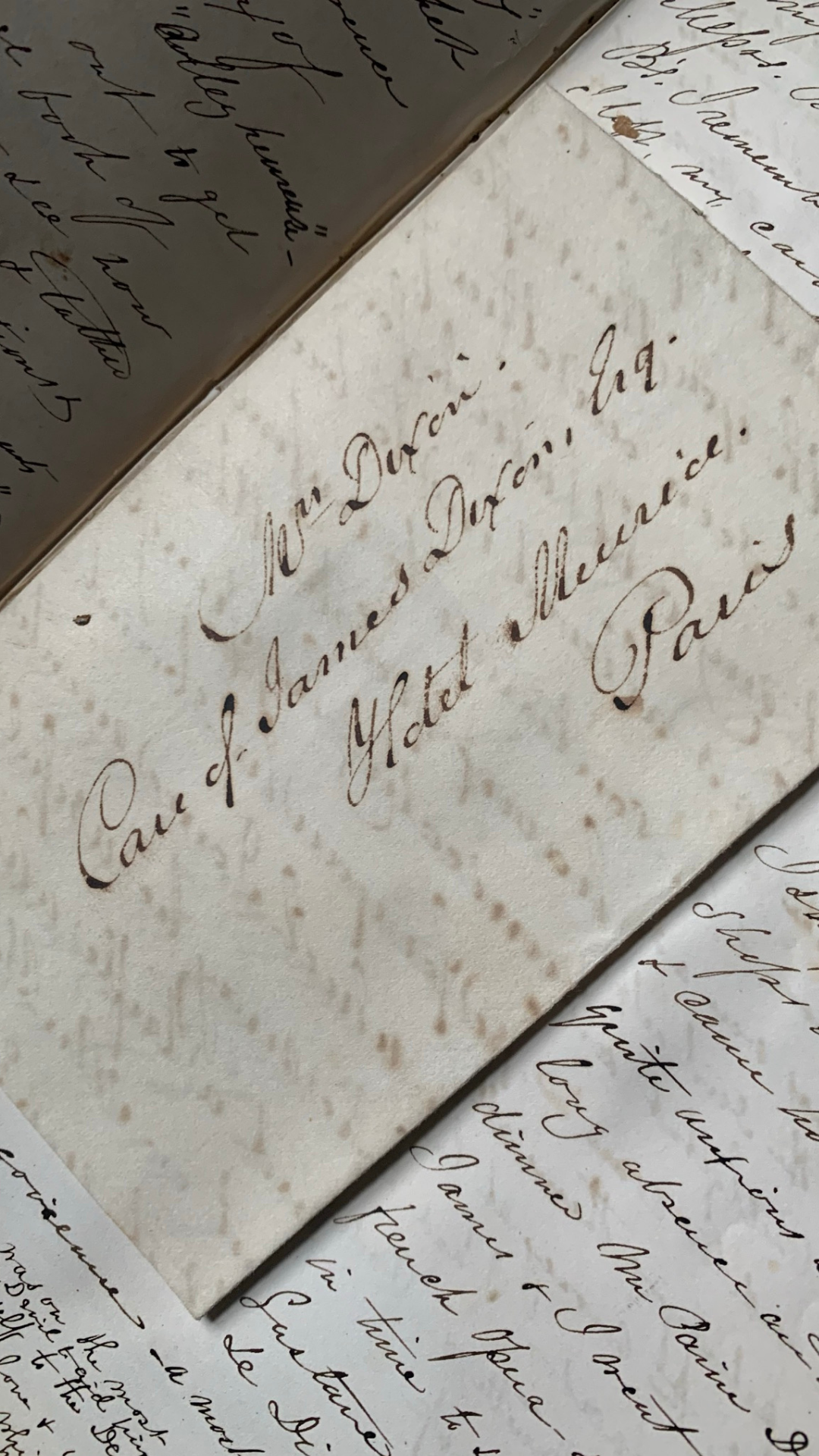
Invitation to Presentation to French Court
This European Honeymoon diary, was written five years before Elizabeth Dixon’s Washington diary in which she described life as a young mother and wife of a junior congressman in the Capitol during the Mexican War.
Mrs. Elizabeth Dixon was my great-great-grandmother.
I came upon her 1845-1847 diary in the course of archival research, and had been partially transcribed by my great aunt, who had sent an extract to Jackie Kennedy in the 1960s after she had started the White House Historical Association. I finished the entire 50 page diary and submitted the text to editor, William Seale, who published my transcription in Issue 33, White House History journal. This experience opened windows for me on the world of publishing, the interesting times in Washington, and not least at the White House.
Transcription of “Diary of Elizabeth Dixon -Washington 1845-47” is available online at:
Actually, my interest in archival research began when I discovered letters and family mementos which confirmed the close friendship between Elizabeth Dixon and First Lady Mary Todd Lincoln.
Thus began my long journey of Lost + Found History.
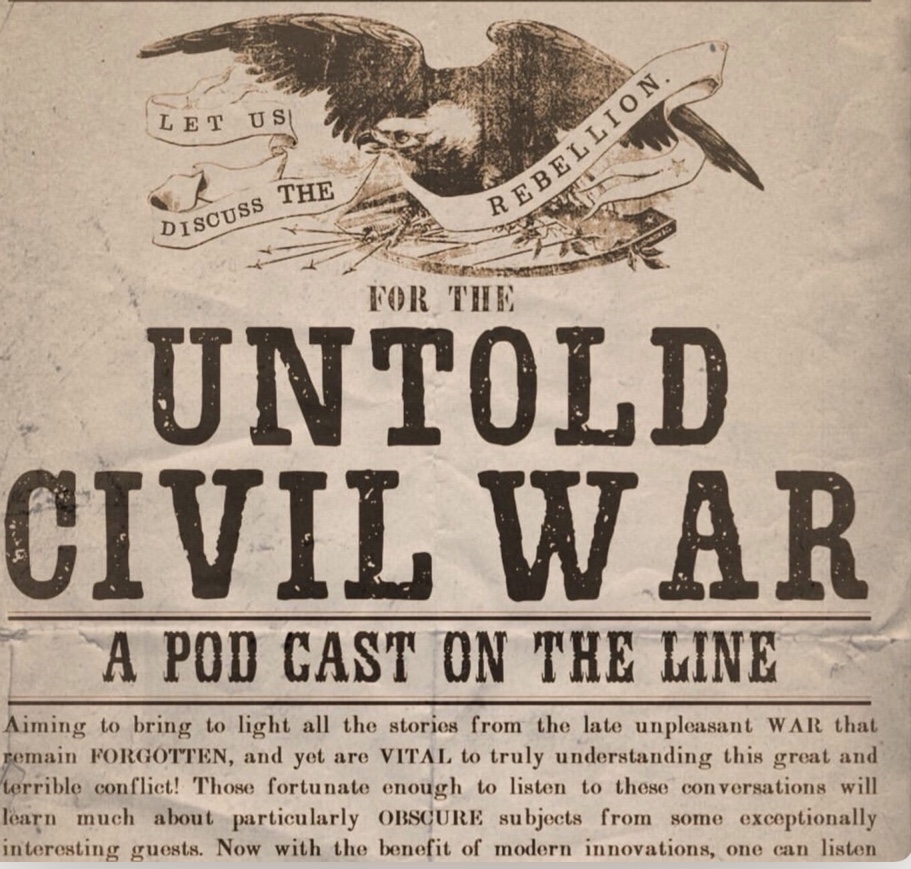
Paul and I discuss Civil War heirlooms that retrace my family’s Civil War footprints and friendship with the Lincolns, from the Lincolns’ first days in Washington until their last.
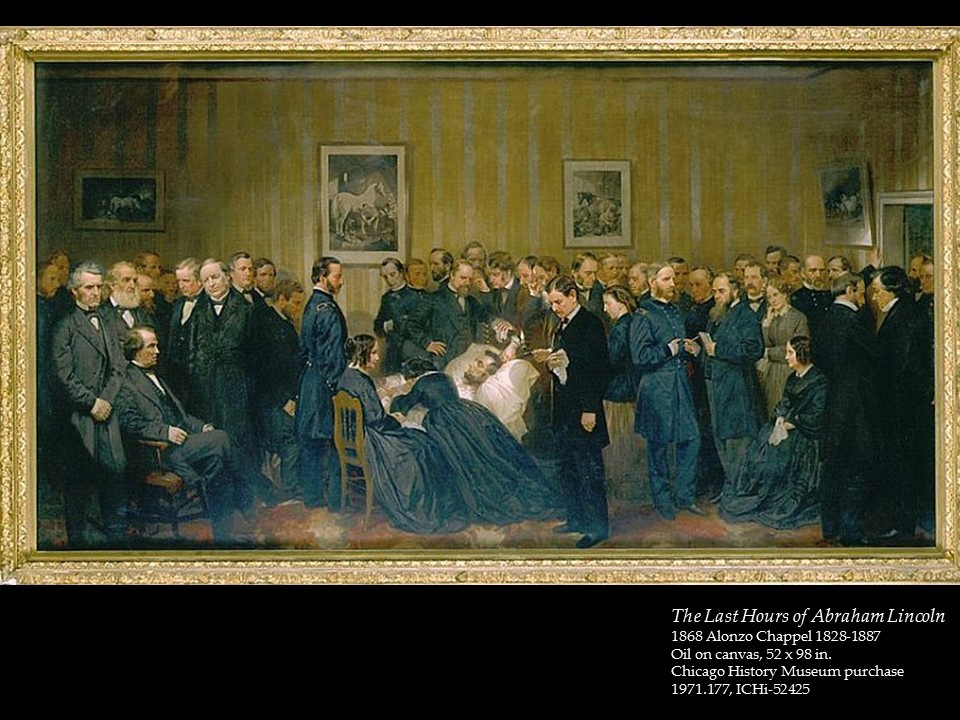
Last Hours of Abraham Lincoln
Until now, little is known about these lady friends of Mary Lincoln who witnessed Lincoln’s death.
We discuss, the possibly as to, why it’s taken 155 years to learn who they were and why these friends were at the Petersen House.
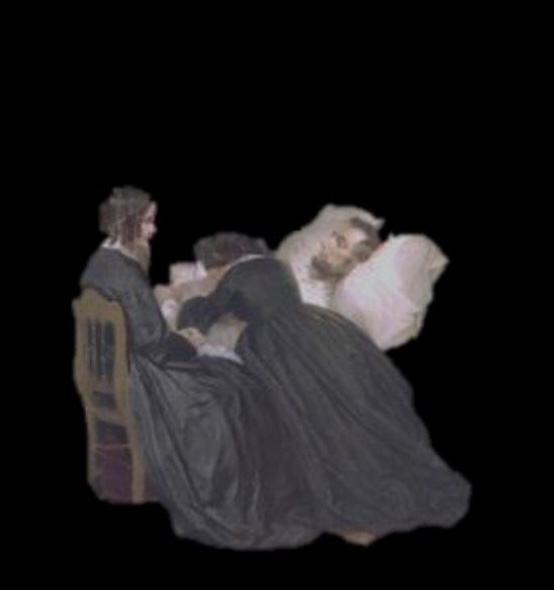
Elizabeth Dixon, Mary Lincoln at Lincoln’s deathbed
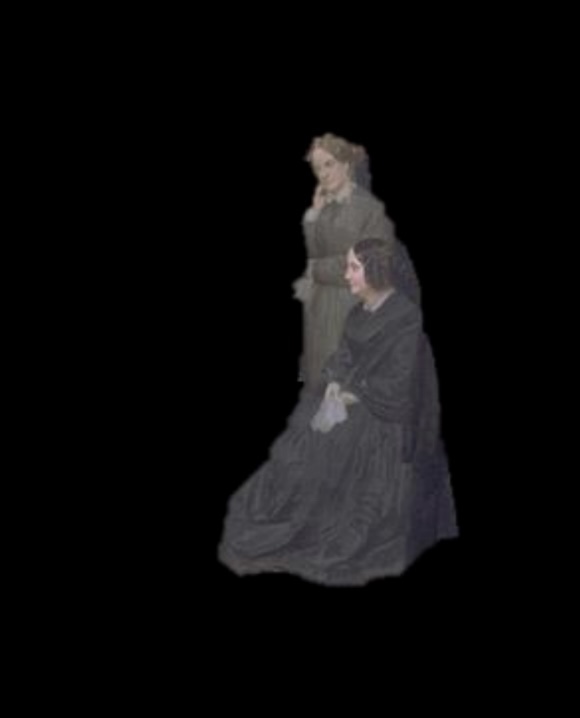
Mrs. Mary C. Kinney and Miss Constance Kinney, future Countess Gianotti, wife of Count Caesar Gianotti of Italy.
Shown on the top, is my great-great grandmother, Mrs. Elizabeth L. C. Dixon with outstretched Mary Lincoln and the dying president.
Below are two other family members who witnessed Lincoln’s death– the sister of Elizabeth L.C. Dixon, Mrs. Mary C. Kinney and niece, Miss Constance Kinney, future Countess Gianotti, wife of Count Caesar Gianotti, of Italy.
Please listen to the episode and let me know if you find it informative and/or interesting.


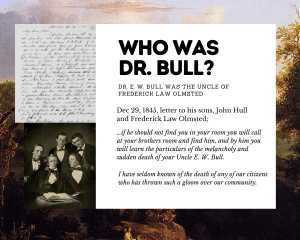
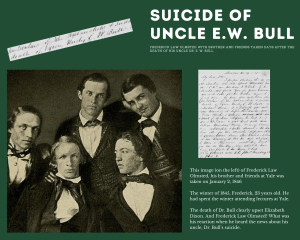
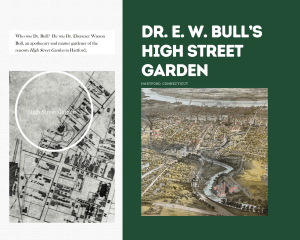
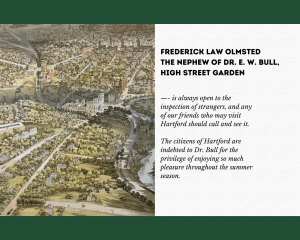

 The Diary of Elizabeth Dixon written during her time in Washington, D.C. Elizabeth often mentions the Kirkpatrick family of New Brunswick, New Jersey. She first visited them on her way from Connecticut to Washington.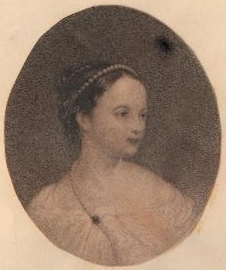

 LOST + FOUND HISTORY