Family collection of lost letters, diaries and objects found in attics and archives retrace archetypal ancestors' footprints to discover their lost life stories
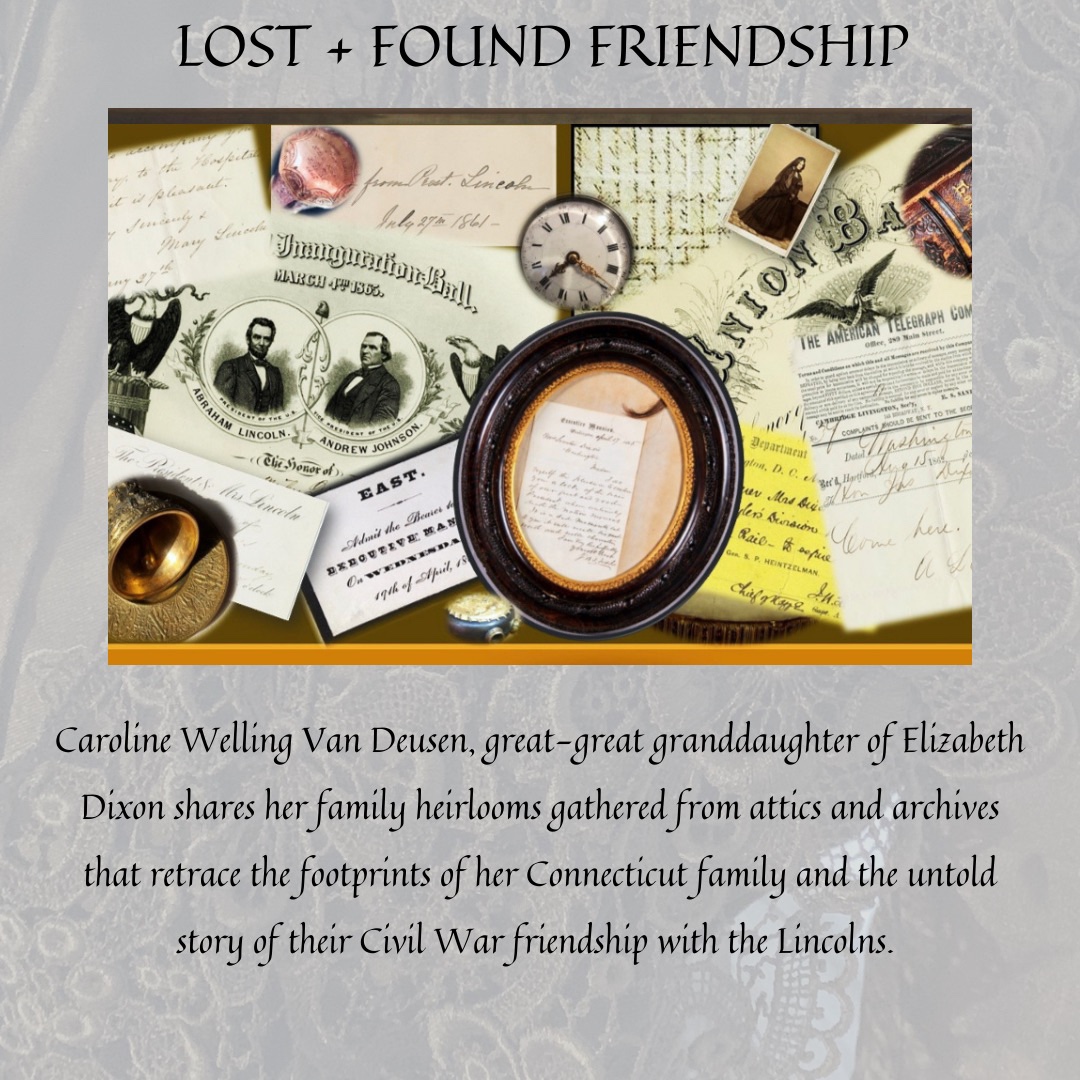
Lost + Found Friendship: stories of lore and legend, and never before seen Civil War heirlooms found in attics and archives retrace my family’s Civil War footprints and friendship they shared with the Lincolns. From their first days in Washington until their last— the Lost + Found Friendship story offers a rare glimpse into the lives of the Lincolns from a new vantage point.
LOST + FOUND FRIENDSHIP
Lost + Found Friendship: is presented for the first time in 155 years. Featuring family Civil War letters, heirlooms, and friendship keepsakes discovered in family attics and archives. Preserved over four generations, the items retrace one family’s Civil War footprints and the friendship they shared with the Lincolns — from their first days in Washington until their last.
Lost + Found Friendship shares a unique glimpse into the lives of the Lincolns from a new vantage point.
Lost + Found Friendship program is available as virtual or live event for public libraries, house museums or historical groups.
Of the millions of pages of history written about the Civil War, my focus lately has been a three page letter written in Lincoln’s handwriting. It is the famous letter President Lincoln wrote on August 22, 1862 to Horace Greeley, editor of the New-York Tribune. Words from this letter are etched in history:
My paramount object in this struggle is to save the Union and is not either to save or to destroy slavery.
Lincoln historian, Phillip Shaw Paludan wrote in The Presidency of Abraham Lincoln:
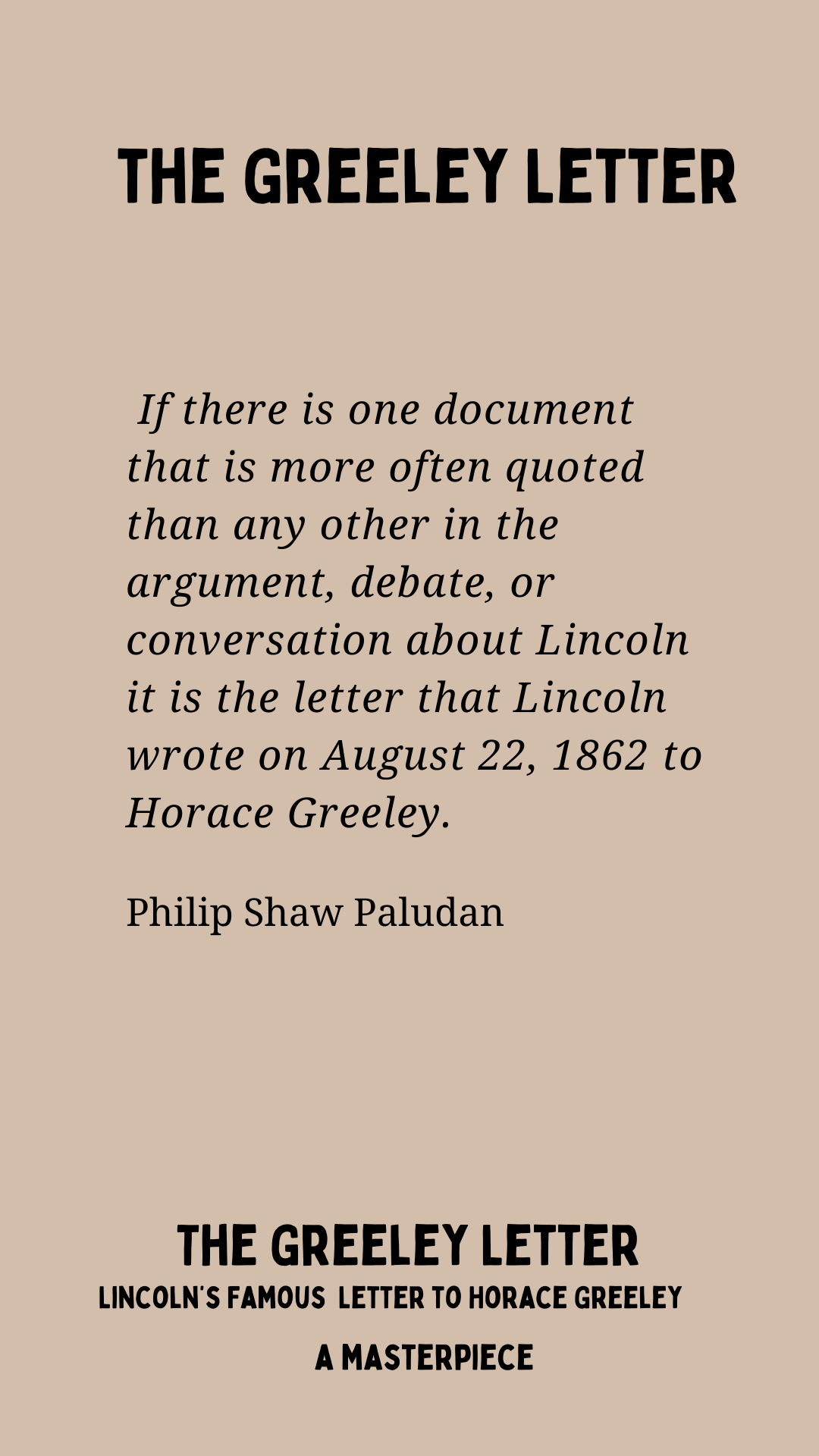
If there is one document that is more often quoted than any other in the argument, debate, or conversation about Lincoln — it is the letter that Lincoln wrote on August 22, 1862 to Horace Greeley.
It was on Friday, August 22nd, 1862 President Abraham Lincoln finished writing his now famous letter to Horace Greeley, editor of the New-York Tribune.
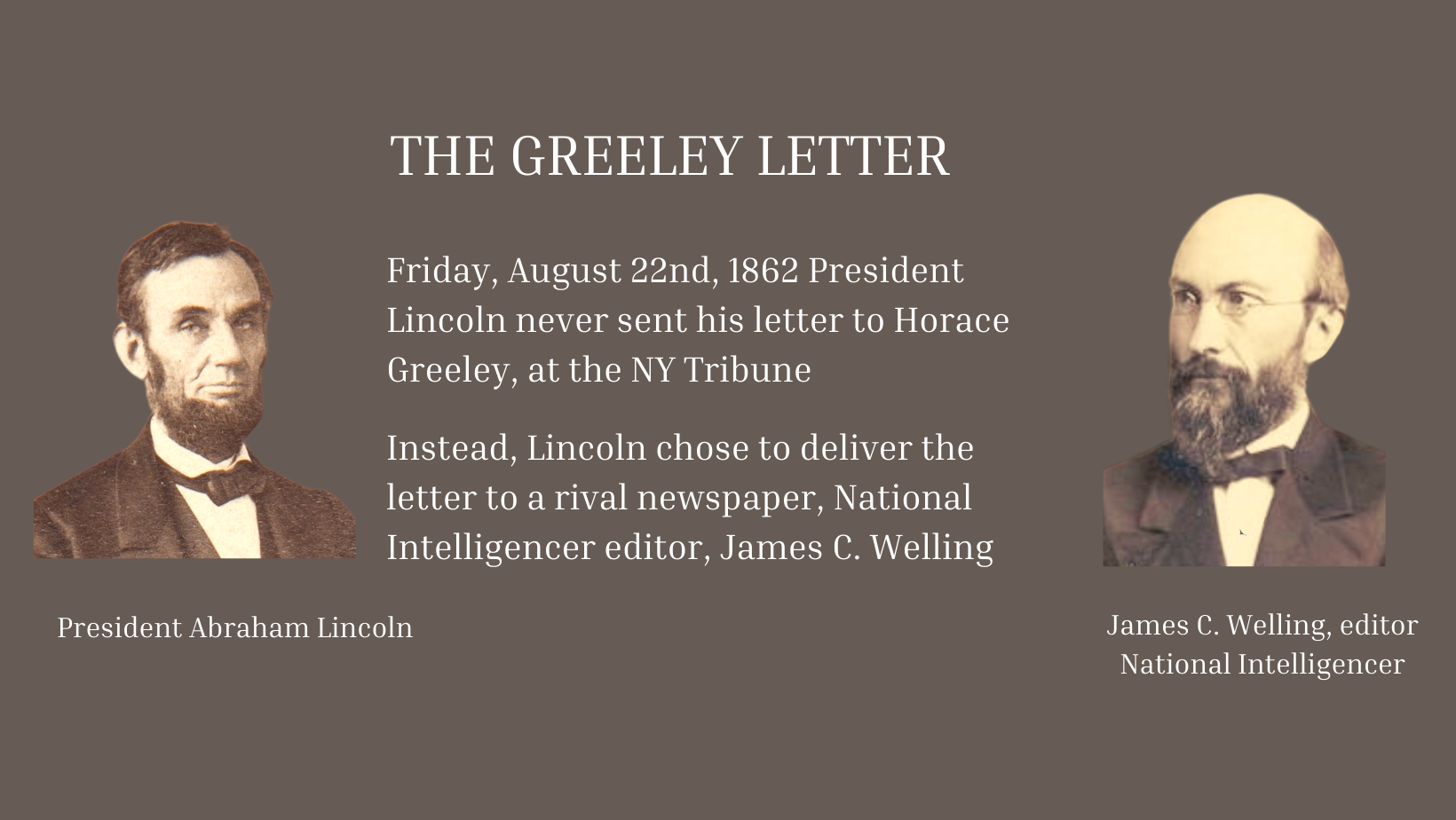
President Lincoln decided not to send the letter to Greeley. Instead, he had the letter delivered to James C. Welling, editor of the National Intelligencer, a rival newspaper to publish the following day.
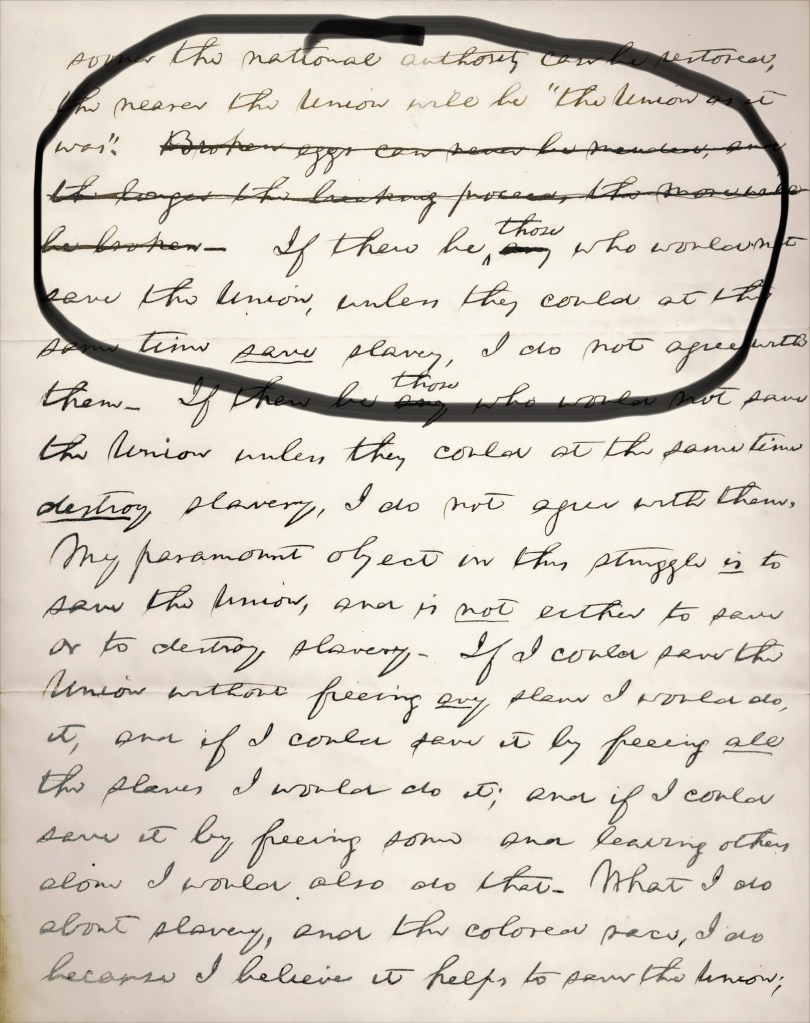
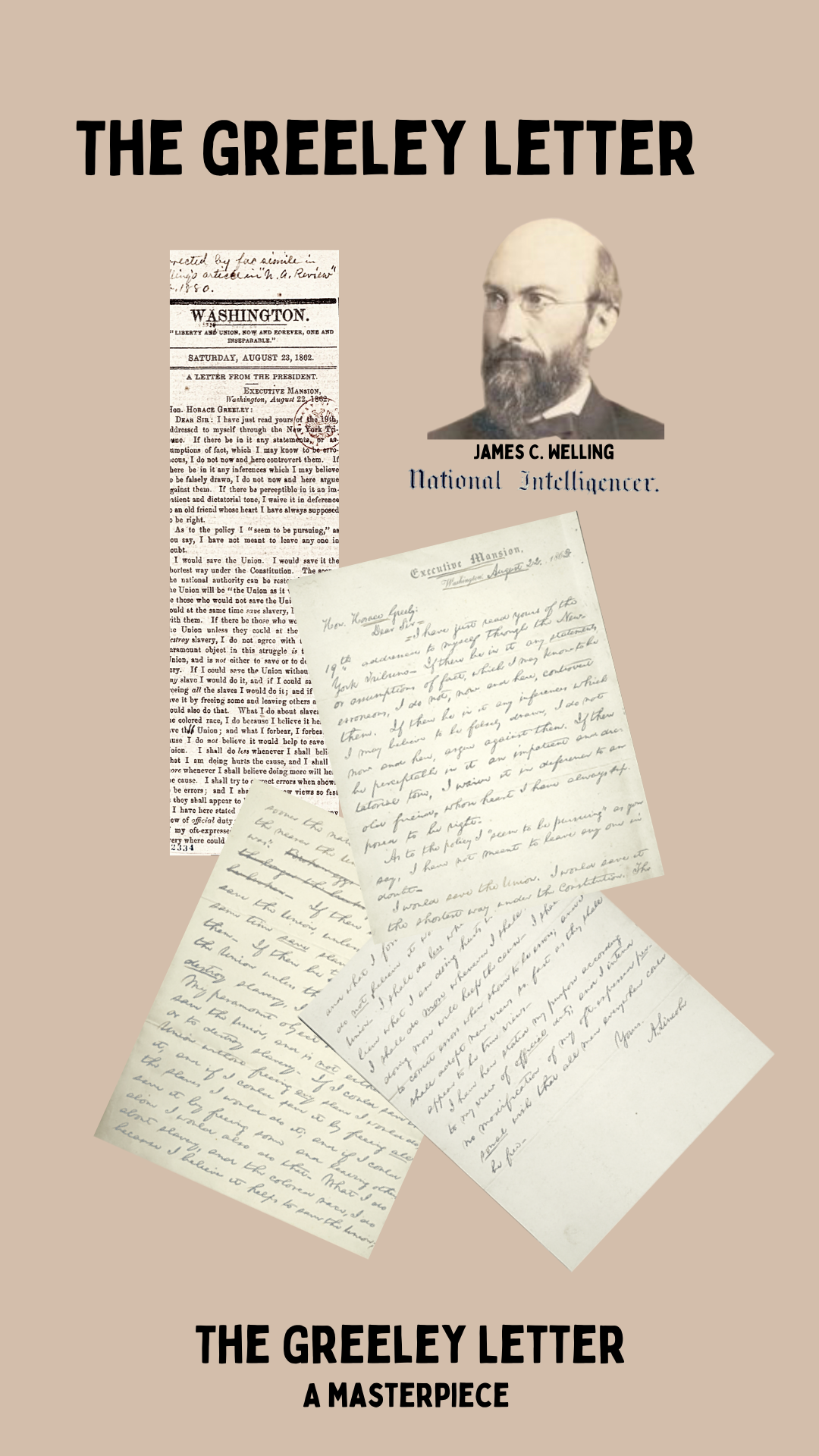
Looking at the original letter, you see that one sentence has a line through it, as though Lincoln changed his mind and crossed the words out.
The Greeley Letter, page 2 of 3, revision approved by Lincoln, requested by James C. Welling, editor, National Intelligencer John Nicolay recalled James C. Welling asked Lincoln to revise the Greeley letter
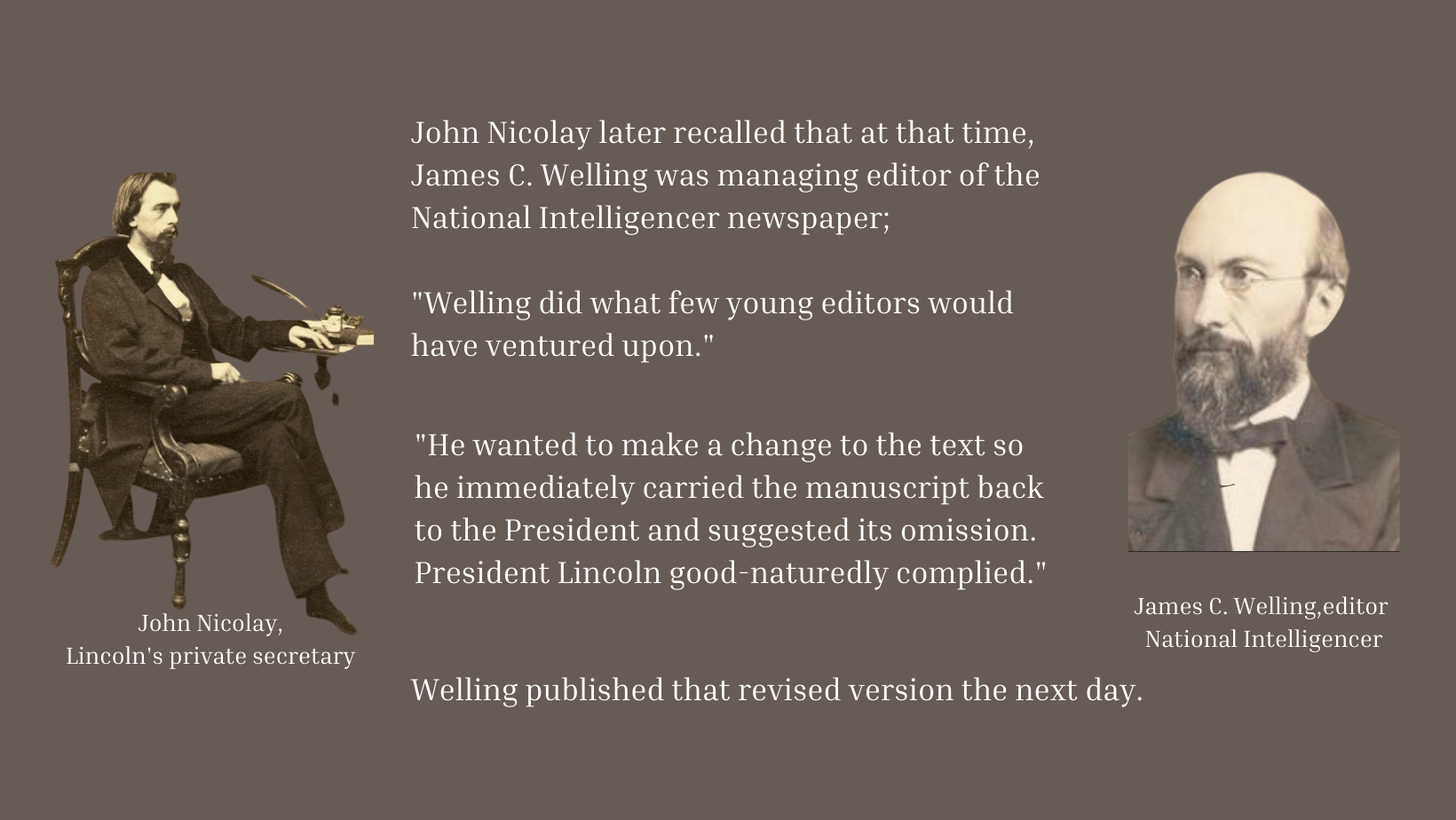
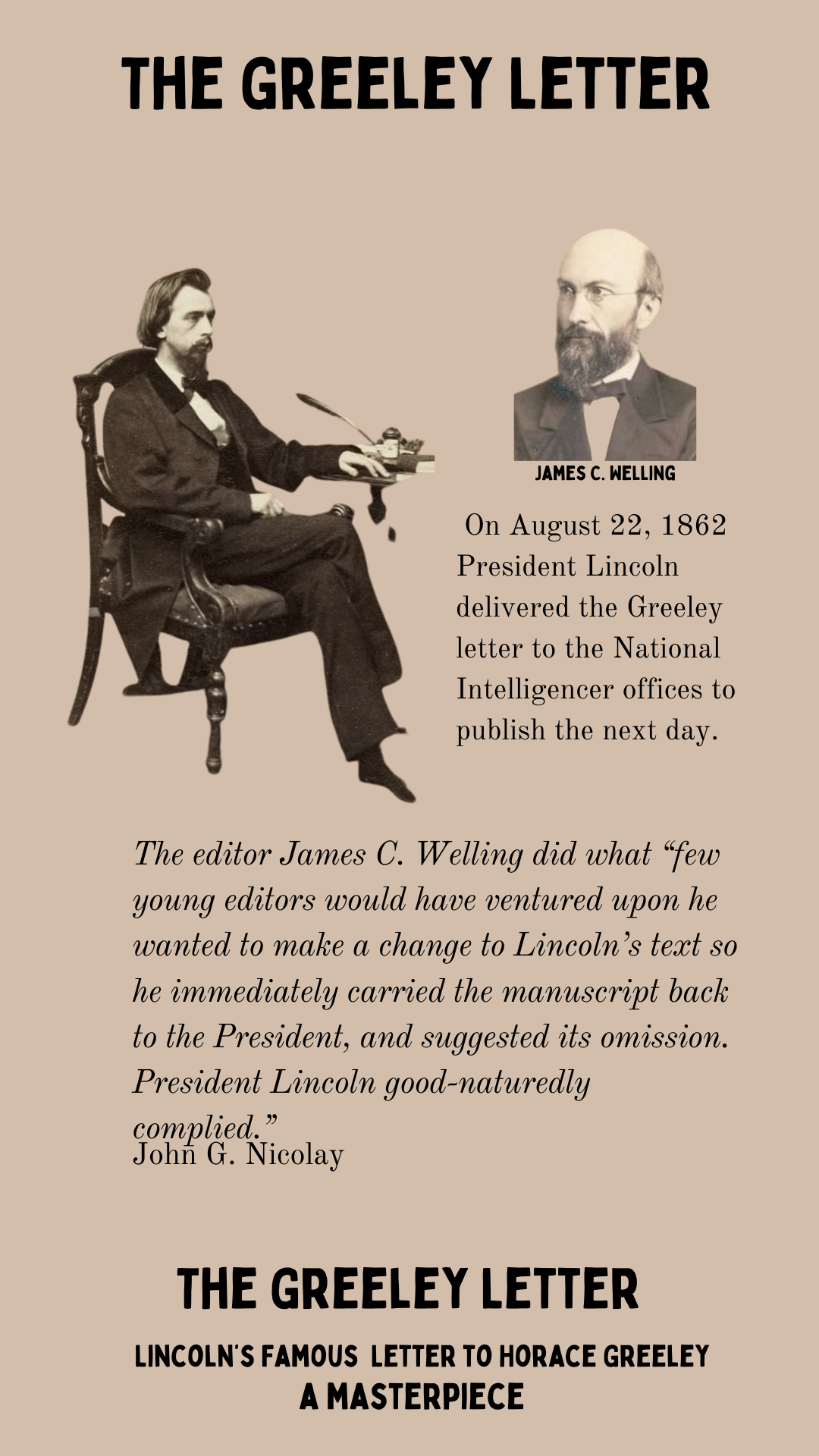
President Lincoln’s secretary, John Nicolay shared the backstory about this revision in Princeton College Bulletin, 1895:
On August 22, 1862, the associate editor of the National Intelligencer, James Clarke Welling did what few young editors would have ventured upon.
He wanted to make a change to Lincoln’s text so he immediately carried the manuscript back to the President and suggested its omission. President Lincoln good-naturedly complied.
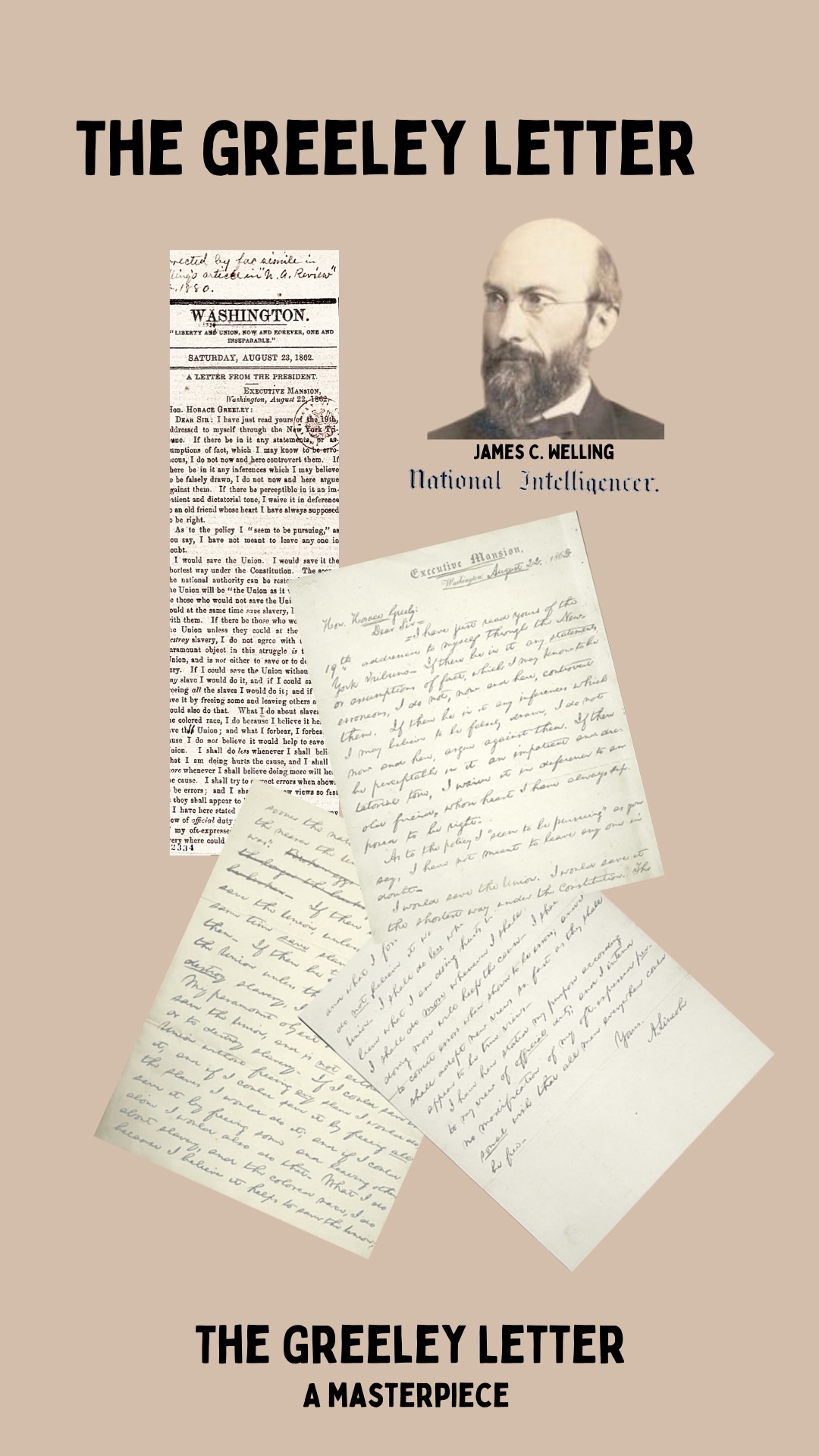
The original letter written by Lincoln, yet revised and published by Welling is a masterpiece.
On Saturday August 23, 1862, Horace Greeley read the famous Greeley Letter, a reply to his editorial, Prayer of Twenty Millions, in a letter addressed to him from President Lincoln within the pages of another newspaper, the National Intelligencer.
The Greeley Letter, I believe, is a masterpiece – an American history treasure. It is inspiring beyond words, three quintessential pages of history.
I’m not alone. My great grandfather, James C. Welling, to whom Lincoln gave the letter, certainly believed it was an American treasure. He kept the Greeley letter his entire life.
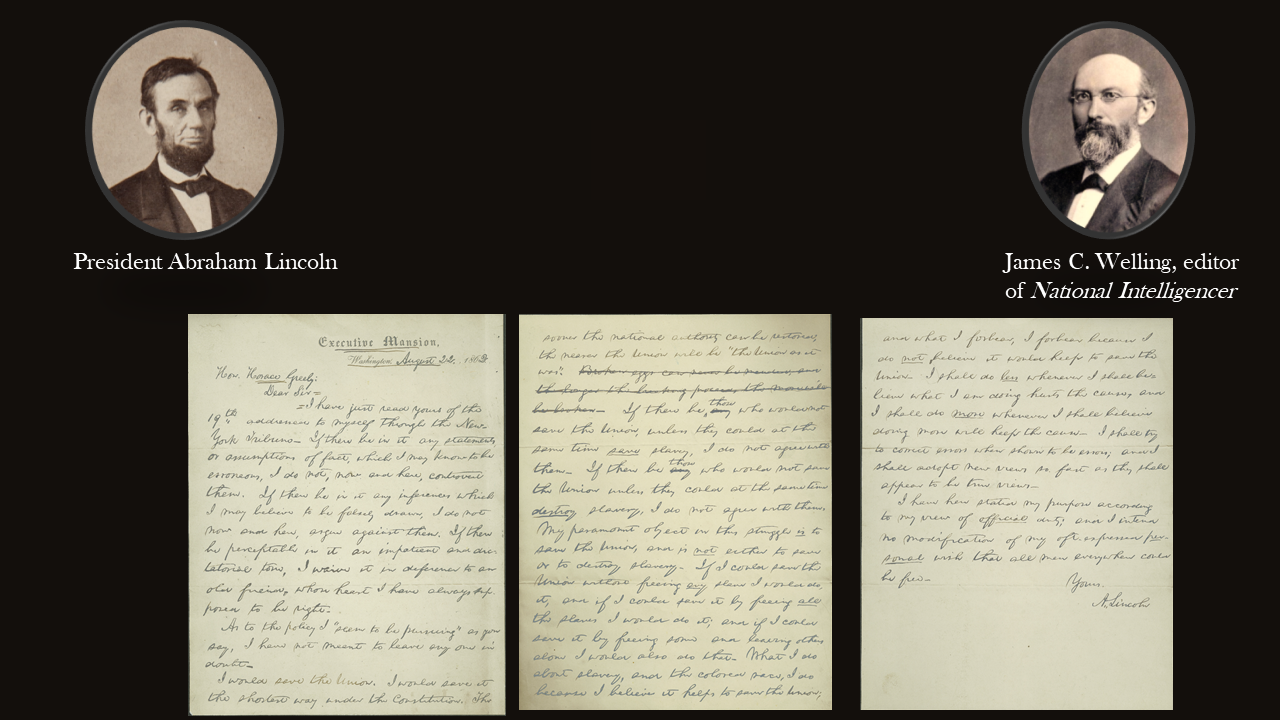
Lincoln and James C. Welling above Lincoln’s letter to Horace Greeley given to Welling.
And after his death our family fulfilled his wishes to find a permanent home for the famous Greeley Letter. We chose not to sell it to a private collector but place the masterpiece where the greatest number of people would see it, and accessible to the public, in perpetuity. What better place for the Greeley Letter, our masterpiece, than the oldest public art museum in the country, the Wadsworth Atheneum.
Knowing the Greeley Letter is safely preserved, within a safe, in a vault at the Wadsworth Athenaeum, I continue with our family’s wish—- that the greatest number of people could see the masterpiece, so that’s why I began an initiative during the Covid pandemic to create Archival Prints of the famous Greeley Letter.
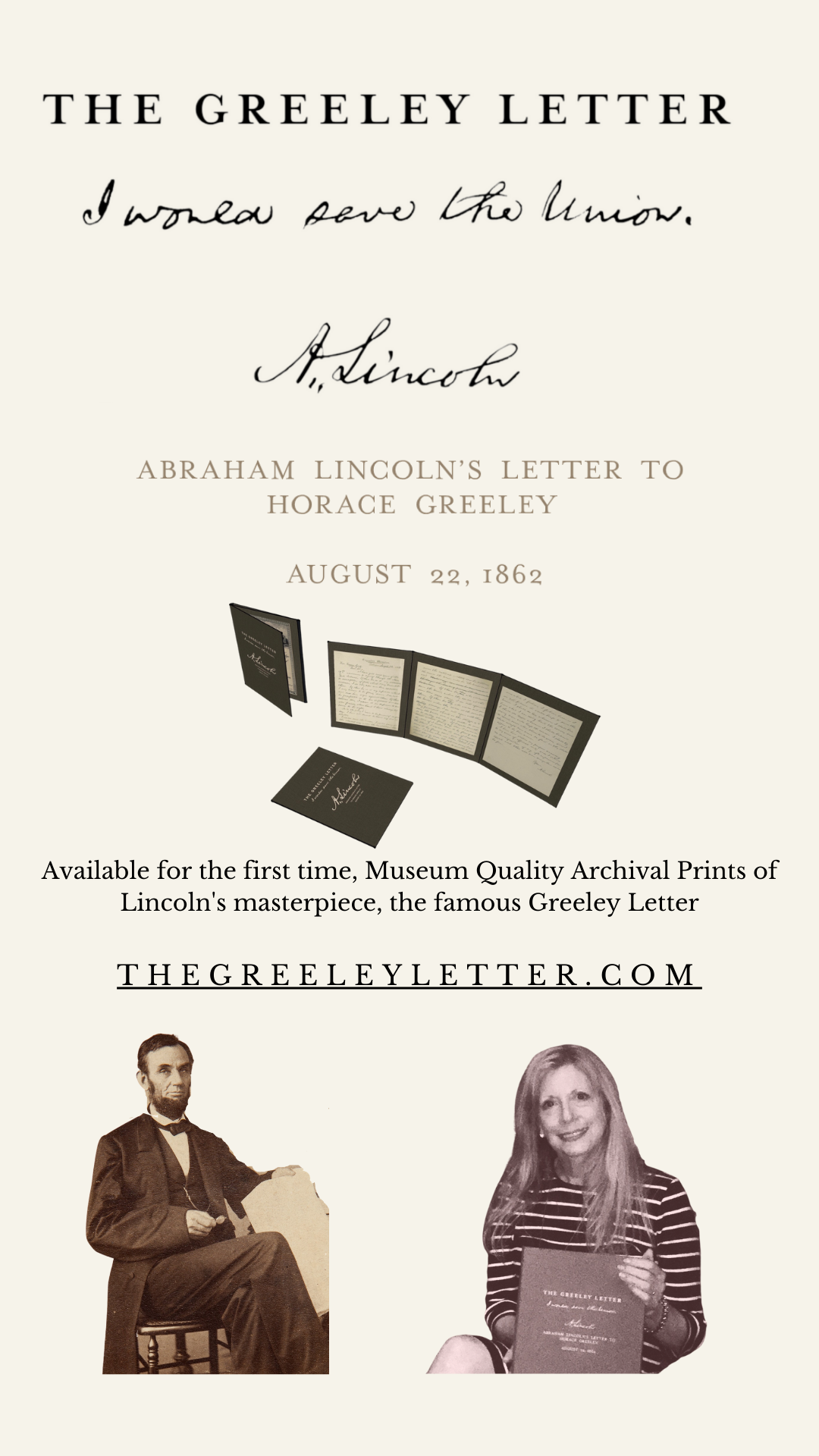
Today, I am proud to announce my 2021 launch of my website: TheGreeleyLetter.com and a limited series of archival prints for sale. I personally printed, packaged and will ship Greeley Letter prints to you.
Archival prints of President Lincoln’s original 3-page letter to Horace Greeley written on August 22, 1862.
Abe and me. He wrote the Greeley Letter, August 22, 1862, gave it to my great-grandfather to publish. Today in 2021, I reproduced my great grandfather’s editor copy albumen silver prints of the letter.
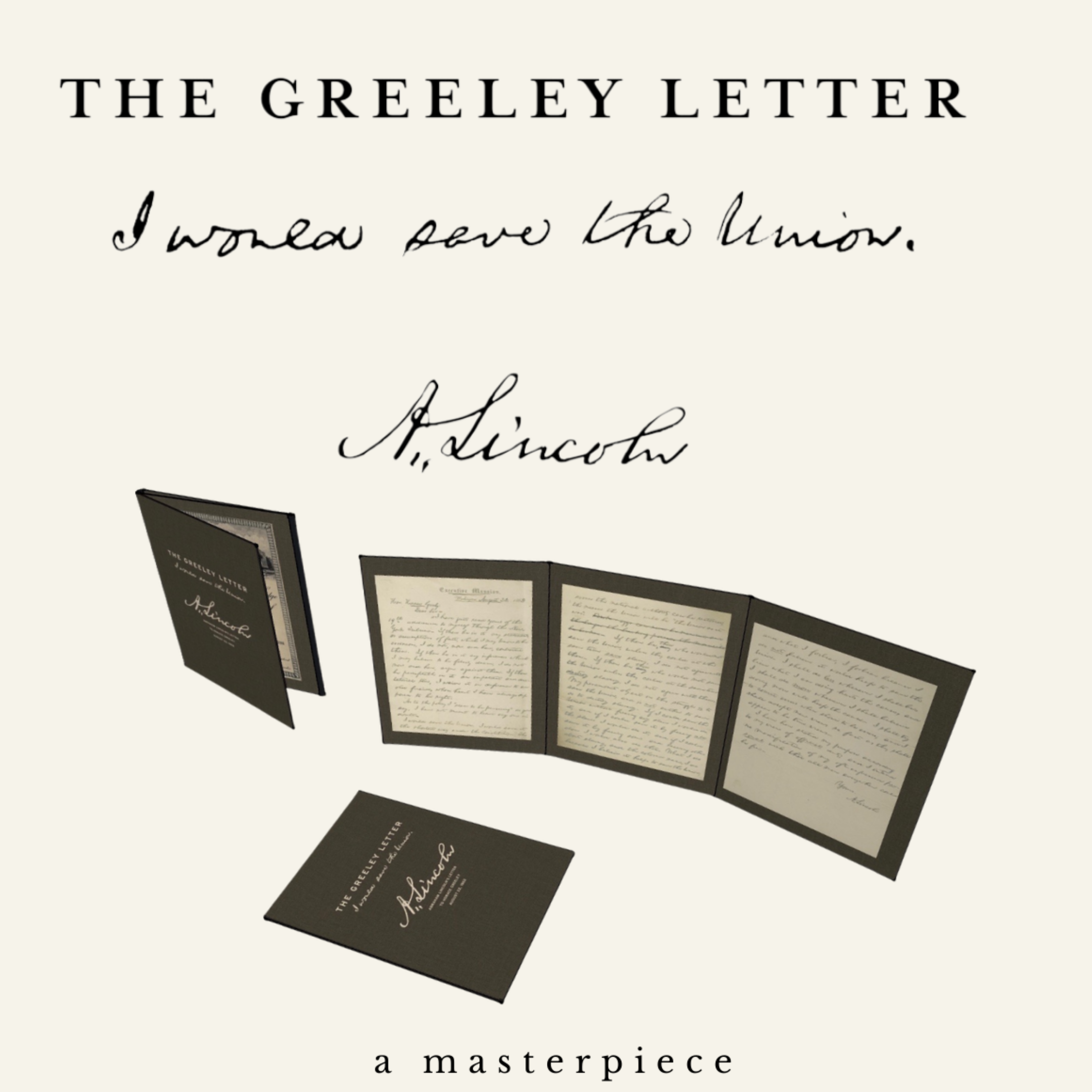
THE GREELEY LETTER archival prints beautifully presented within an elegant linen bound tri-folio and embossed cover with words from the letter “I would save the Union” followed by Lincoln’s famous signature.
Archival Prints of the Greeley Letter
Special thanks for the efforts of talented graphic designers, Rumora Studios and team Portfolio Box, Warren, RI for design and production, and for the love, support and encouragement from my family and brother, James C. Welling (yes, another one). A list of print specs and packaging materials are included with each Greeley Letter archival print.
The Greeley Letter, is a masterpiece – an American history treasure. It is inspiring beyond words, three quintessential pages of history.
During my Jan 16, 2021 interview on Untold Civil War podcast we spoke about a couple major events of the Civil War that were witnessed by members of my family.
On August 22, 1862 when President Lincoln finished his famous letter to Horace Greeley he had the letter delivered to and published by National Intelligencer editor, my great grandfather, James Clarke Welling.
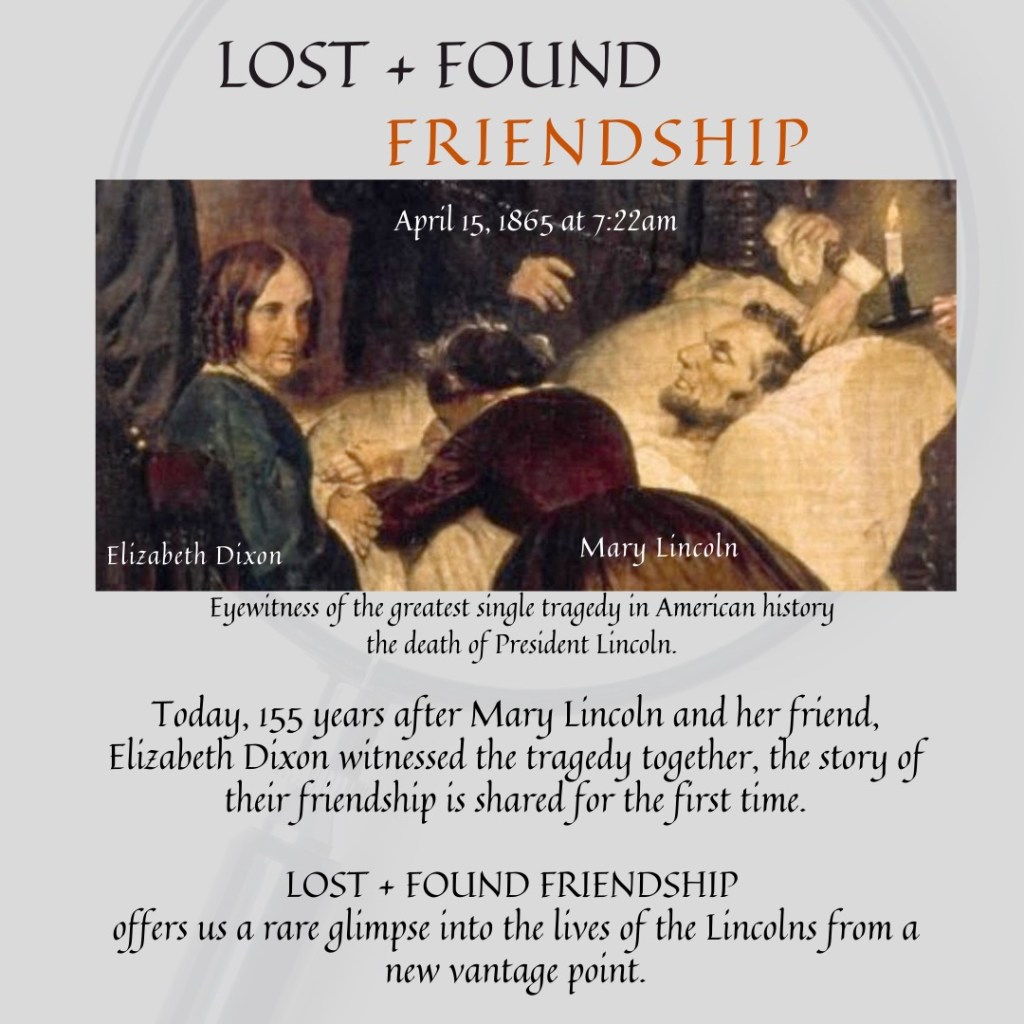
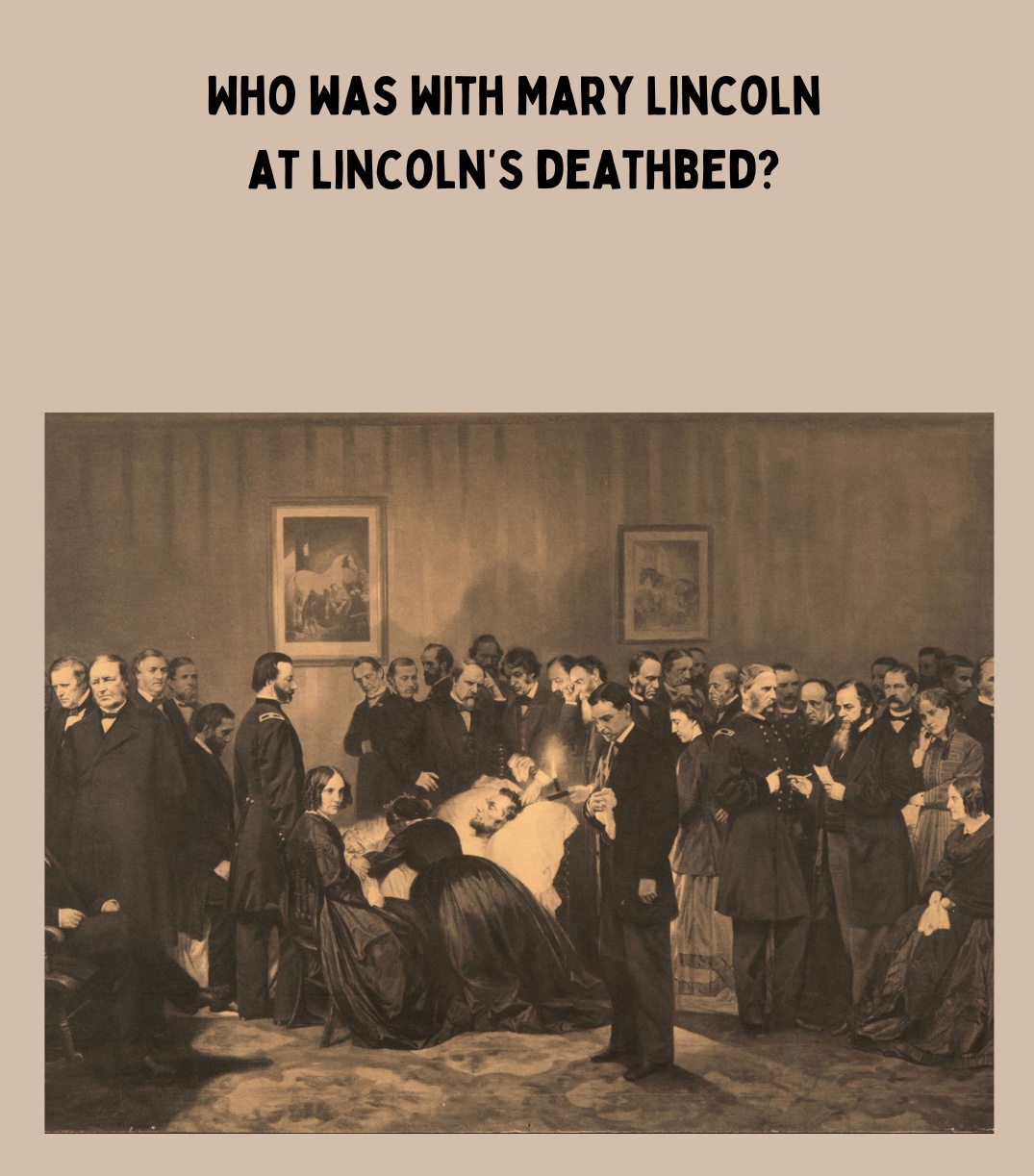
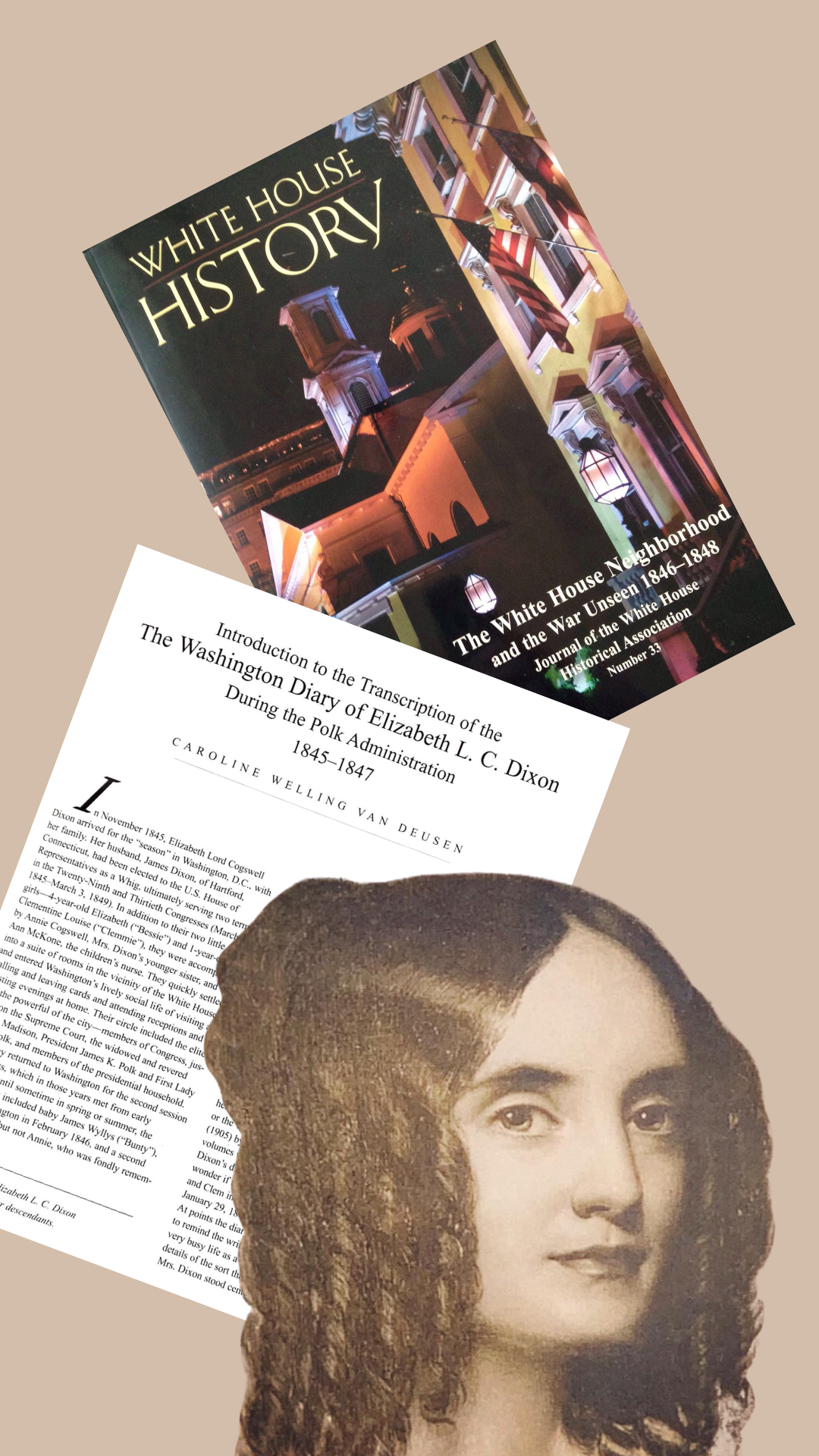
Also, another family member, my great great grandmother, Elizabeth L. C. Dixon was a witness at the Petersen House, when President Lincoln died at 7:22 am on April 15, 1865.
Follow Lost and Found History on Instagram for new stories.
Paul and I discuss Civil War heirlooms that retrace my family’s Civil War footprints and friendship with the Lincolns, from the Lincolns’ first days in Washington until their last.
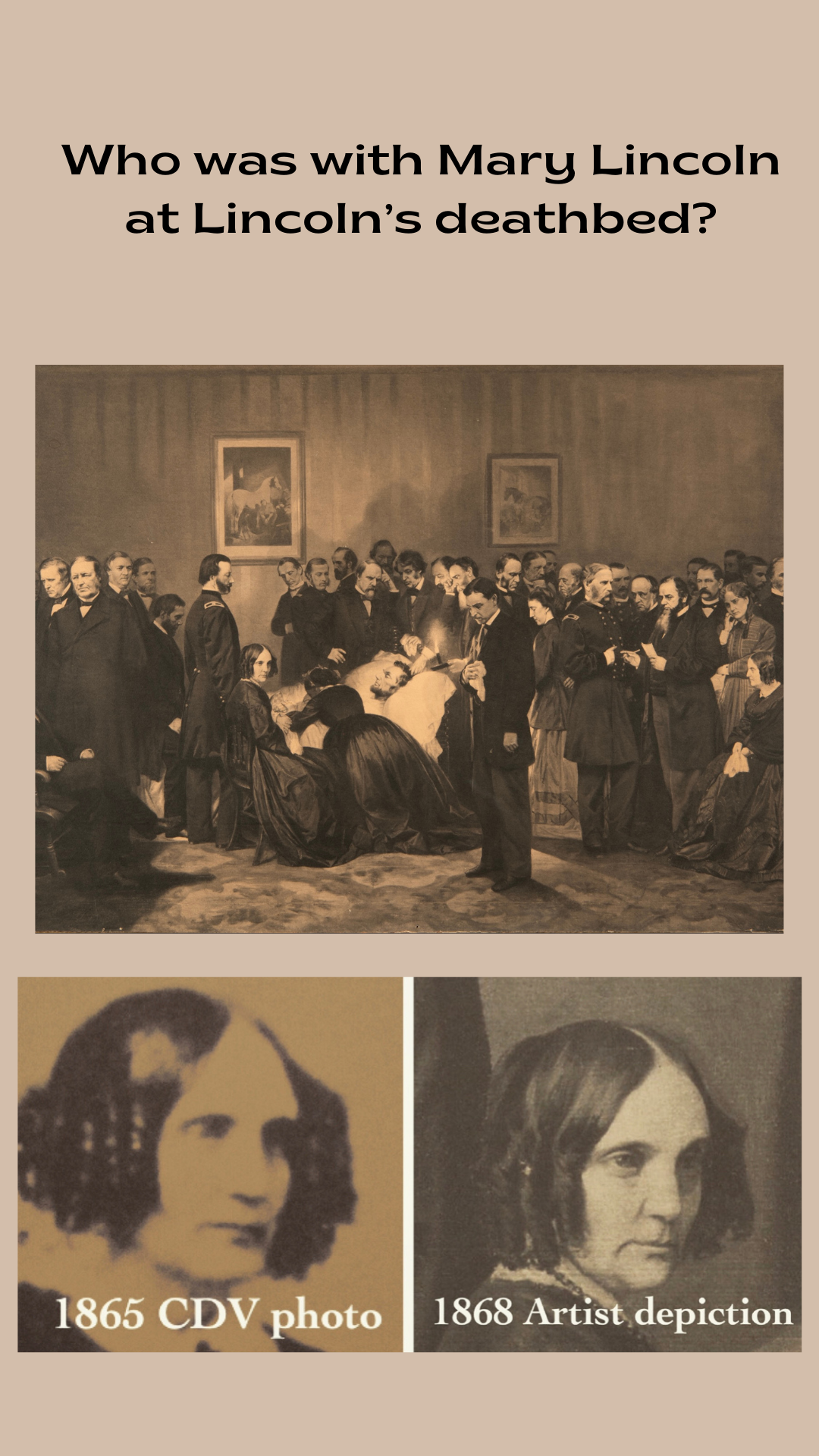
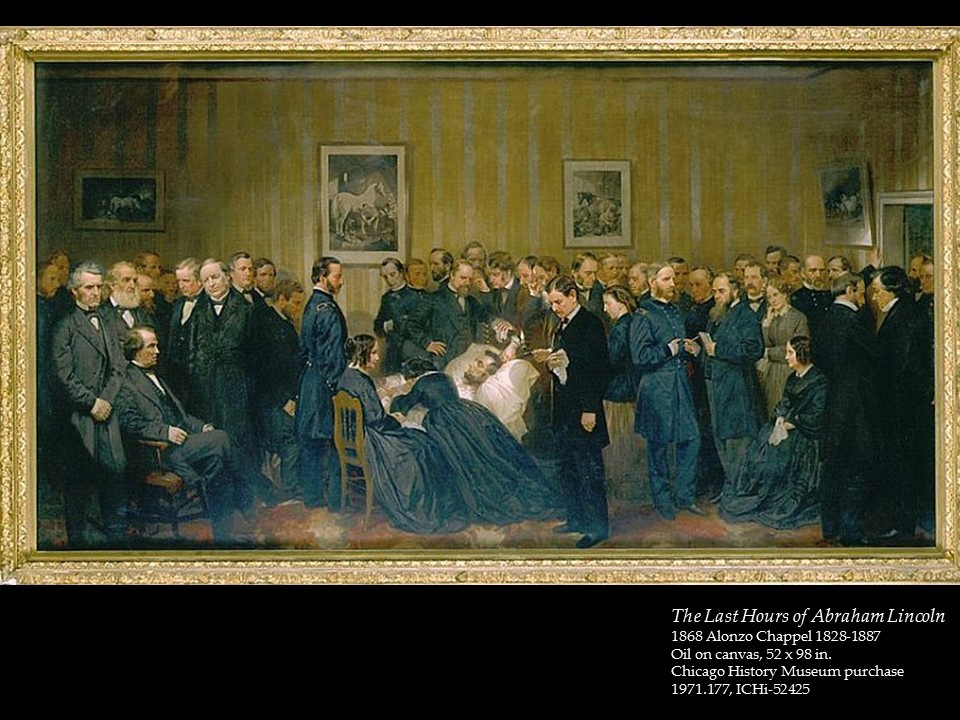
Last Hours of Abraham Lincoln
Until now, little is known about these lady friends of Mary Lincoln who witnessed Lincoln’s death.
We discuss, the possibly as to, why it’s taken 155 years to learn who they were and why these friends were at the Petersen House.
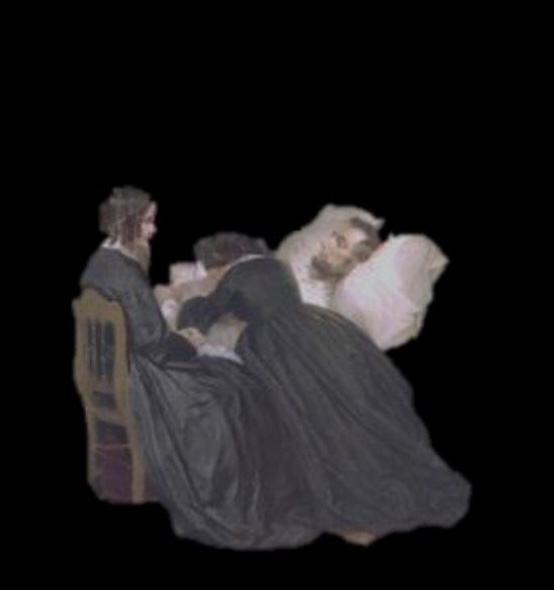
Elizabeth Dixon, Mary Lincoln at Lincoln’s deathbed
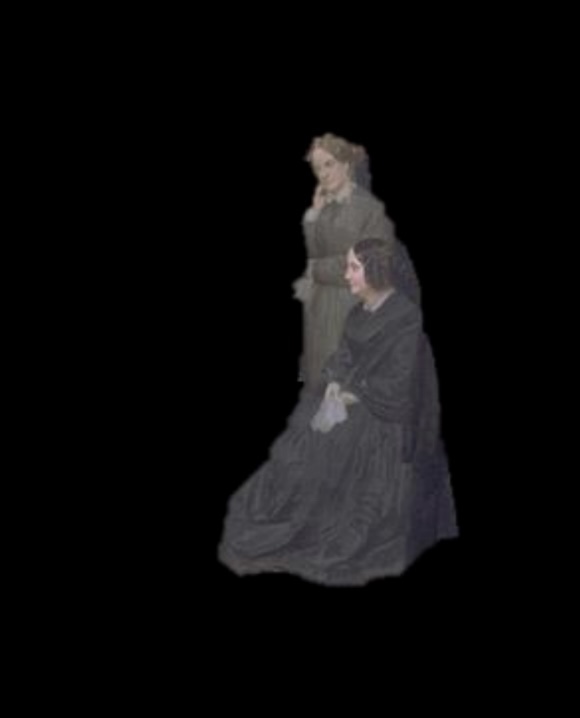
Mrs. Mary C. Kinney and Miss Constance Kinney, future Countess Gianotti, wife of Count Caesar Gianotti of Italy.
Shown on the top, is my great-great grandmother, Mrs. Elizabeth L. C. Dixon with outstretched Mary Lincoln and the dying president.
Below are two other family members who witnessed Lincoln’s death– the sister of Elizabeth L.C. Dixon, Mrs. Mary C. Kinney and niece, Miss Constance Kinney, future Countess Gianotti, wife of Count Caesar Gianotti, of Italy.
Please listen to the episode and let me know if you find it informative and/or interesting.
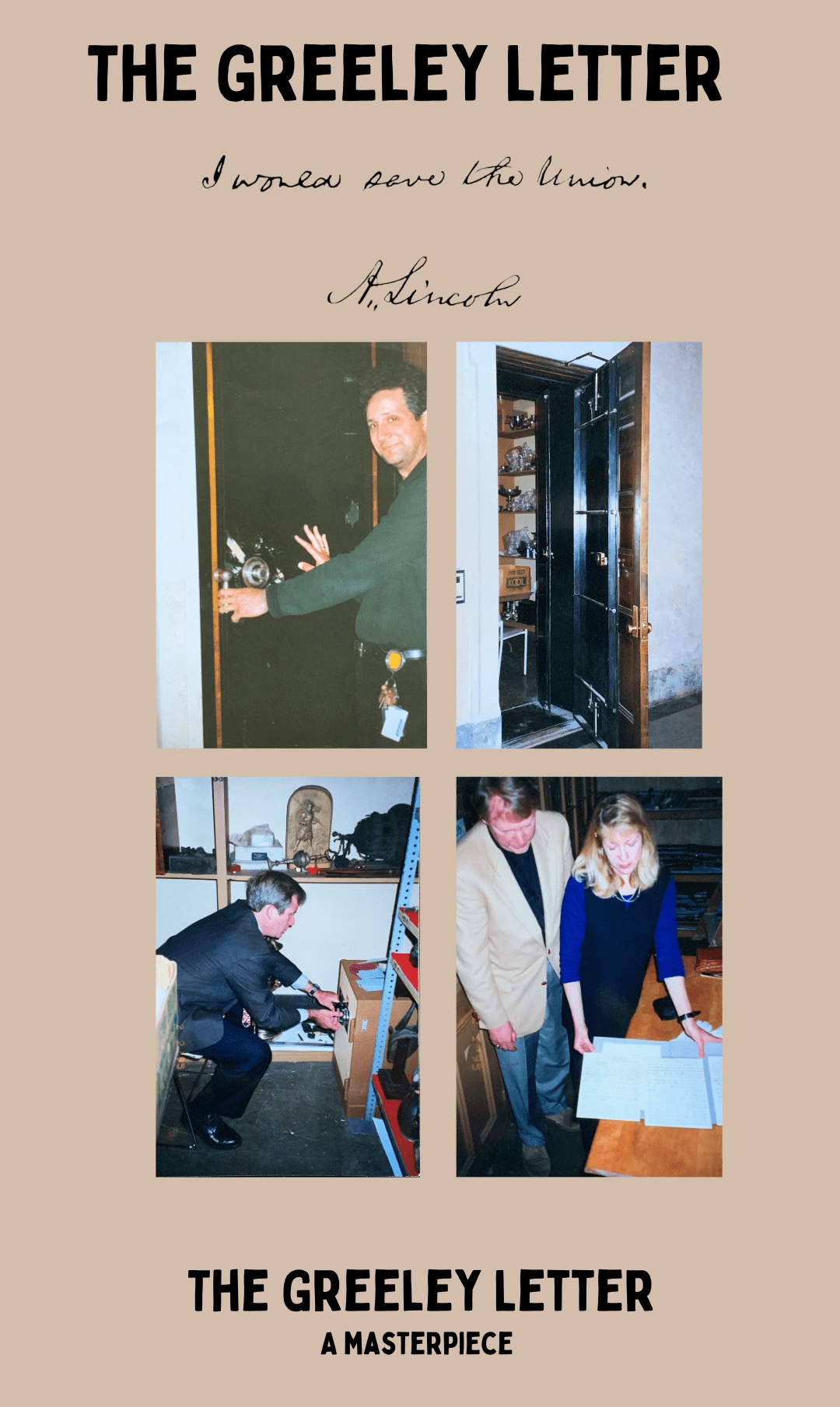
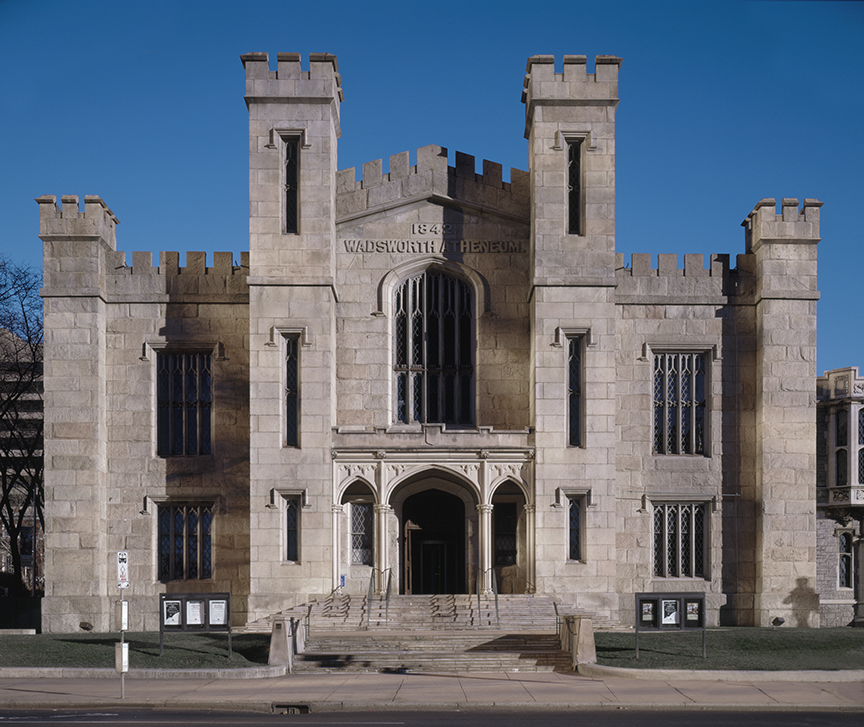
During a trip back to Hartford Connecticut I scheduled a visit to the Wadsworth Atheneum to see President Lincoln’s famous letter he wrote to Horace Greeley, August 22, 1862.
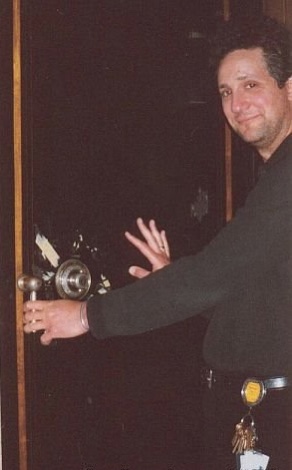
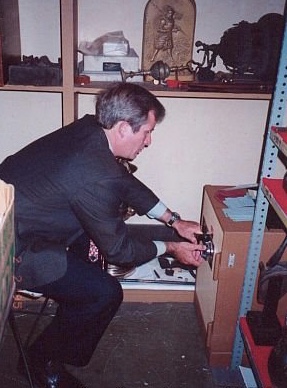
Within this vault is President Lincoln’s famous letter to Horace Greeley
Inside the vault is the safe with the famous letter, the administrator was on vacation, the summer staff struggled and took 45 minutes to open
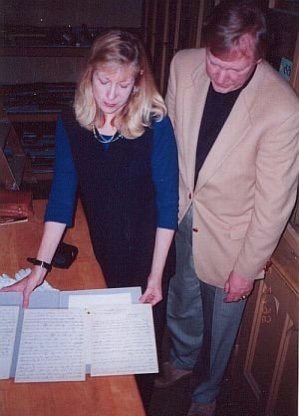
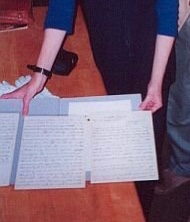
Seeing the masterpiece: The Greeley Letter
Words from this letter are etched in American History;
My paramount object is to save the Union and is not either to save or destroy slavery…
The historian Phillip Shaw Paludan wrote about the importance of the letter;
If there is one document that is more often quoted than any other in the argument, debate, or conversation about Lincoln it is the letter that Lincoln wrote on August 22, 1862 to Horace Greeley.
On Friday, August 22,1862 Lincoln sent his famous Greeley letter not to Horace Greeley but a rival editor, Dr. James Clarke Welling, the managing editor of the National Intelligencer who published the letter the following day.
During the Civil War, and early in the war Dr. Welling often advised President Lincoln and his Cabinet members.
This letter appeared for the first time in the National Intelligencer on August 23, 1862 and the letter came into my hands from the fact I was one of the editors.
In his 1880 article Dr. James Clarke Welling included a facsimile of the letter ‘for editorial curiosity’.
Why is this American treasure at the Wadsworth Atheneum ? Why was I allowed to handle the original?
In 1923, almost 100 years ago, my family donated the Greeley Letter to the Wadsworth Atheneum. It is the oldest art museum in the country.
It was the wish of our great grandfather, Dr. James Clarke Welling that the Greeley Letter be placed in a public museum preserved for others in the future.
He believed the Greeley Letter was an American masterpiece. Since it’s inception in the 1840s, the Wadsworth Atheneum has served the community as both public art museum, historical society and public library. There the letter resides in perpetuity.
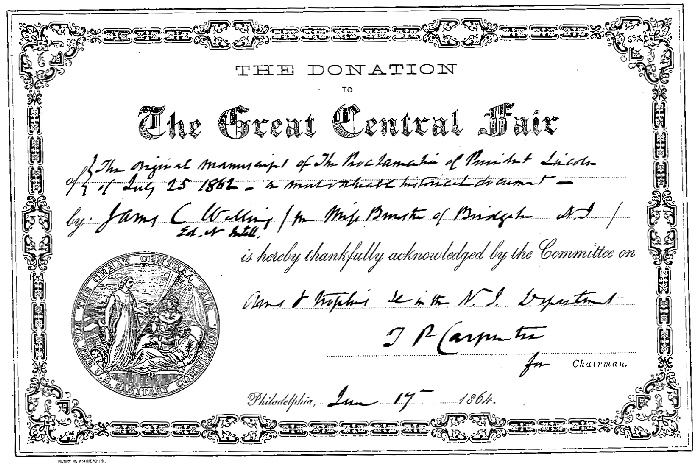
The original manuscript of President Lincoln’s Proclamation, written July 25, 1862 was a prelude to the Emancipation Proclamation.
After President Lincoln composed this proclamation, the draft handwritten copy was delivered to editor, James Clarke Welling, for publication in the National Intelligencer.
As mentioned in a previous post, Lincoln did the same gesture a month later, when he delivers his famous Greeley Letter to Welling who published and then retained the original draft of Greeley Letter throughout his lifetime.
As for the July 25th, 1862 proclamation after he received and published it in the Intelligencer, James C. Welling donated the page torn from history to the New Jersey Committee at the 1864 Great Fair of Philadelphia.
The manuscript was sold by lottery and the lucky bidder was Anne Hampton Brewster, who bequeathed her books, manuscripts and maps to the Library Company of Philadelphia.



 LOST + FOUND HISTORY