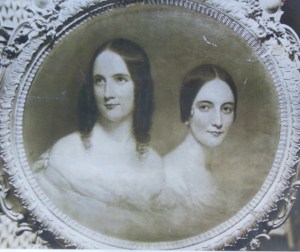
 The Diary of Elizabeth Dixon written during her time in Washington, D.C. Elizabeth often mentions the Kirkpatrick family of New Brunswick, New Jersey. She first visited them on her way from Connecticut to Washington.
Wednesday October 15, 1845. Mrs. Kirkpatrick came to pass the day and took tea the following day. Mr. Kirkpatrick had helped James Dixon find their lodgings. November 28, 1845 We went to tea at Mr. Kirkpatrick’s… Mr. Dixon had been with Mr. K. to the various houses.. and then soon the next day. Saturday November 29, 1845 Mrs. Kirkpatrick called to bring my nurse Mrs. Skippen to present & I liked her appearance better than any nurse I have had. She is pleasant & good tempered I am sure. I bid her adieu till January. Mrs. Kirkpatrick had arranged for a nurse for Elizabeth, who was seven months pregnant and due in late January.  These caring Kirkpatrick family members were Elizabeth Dixon’s stepmother’s family. In April 1837, when Elizabeth Dixon was 17 years old her mother, Elizabeth Abbott Cogswell died.
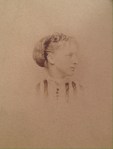
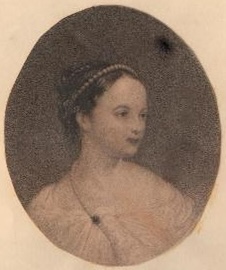 Elizabeth Abbott Cogswell
Later that year her father, Rev. Jonathan Cogswell married Miss Jane Eudora Kirkpatrick, daughter of Andrew Kirkpatrick and Mrs. Jane Bayard Kirkpatrick of New Brunswick, New Jersey. Mrs. Kirkpatrick’s sister was Margaret Bayard Smith, the famous author who died two years before the Dixons arrived in Washington; but no doubt Elizabeth Dixon was well aware of her writings and perhaps letters that were sent to her stepmother.
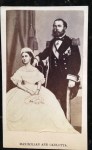
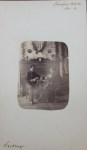
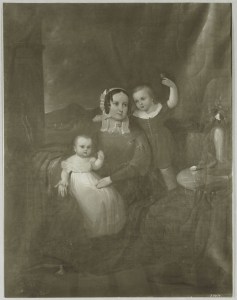 This portrait is Elizabeth Dixon’s stepmother, Mrs. Jonathan Cogswell with Children, Jane Cogswell and Andrew Kirkpatrick Cogswell.
We know little about Elizabeth Abbott Cogswell, as none of her writing was preserved. But these touching words were written to Elizabeth Dixon’s stepmother, Mrs. Jane Kirkpatrick Cogswell from her mother, Mrs. Jane Bayard Kirkpatrick. What wonderful advice and departing works to offer to your child.
MY DEAR DAUGHTER I hope you will find your mental resources augmented by what you see abroad. Every form of society must present hints for the improvement of character. Whether the manners are to be admired, or are censurable, our own minds may be amended by emulating what is good and avoiding what is evil. After reflection, does as much good as present observation. Things appear more in their true light and just proportion when seen at a distance. And while you cultivate your talents, and polish your manners, study to acquire those graces which are above all price, meckness, gentleness, and charity. A knowledge of the varieties of character and circumstances of human life is useful in forming and strengthening the judgment. An actual observation of things is more important than remarks found in books. It enables one better to estimate what is advanced by others. A magnificent spectacle met my eye this morning. Every tree, shrub, and twig were incrusted with ice, and when the sun shone, a magic world of crystal fixed tha gaze. The frost work was superb, but like all the fragile glories of our sublunary sphere, the very sunbeam that caused their brilliance accelerated their destruction.
More of these heavenly words can be found in:
For the complete transcription of Diary of Elizabeth Dixon, 1845-47





 LOST + FOUND HISTORY